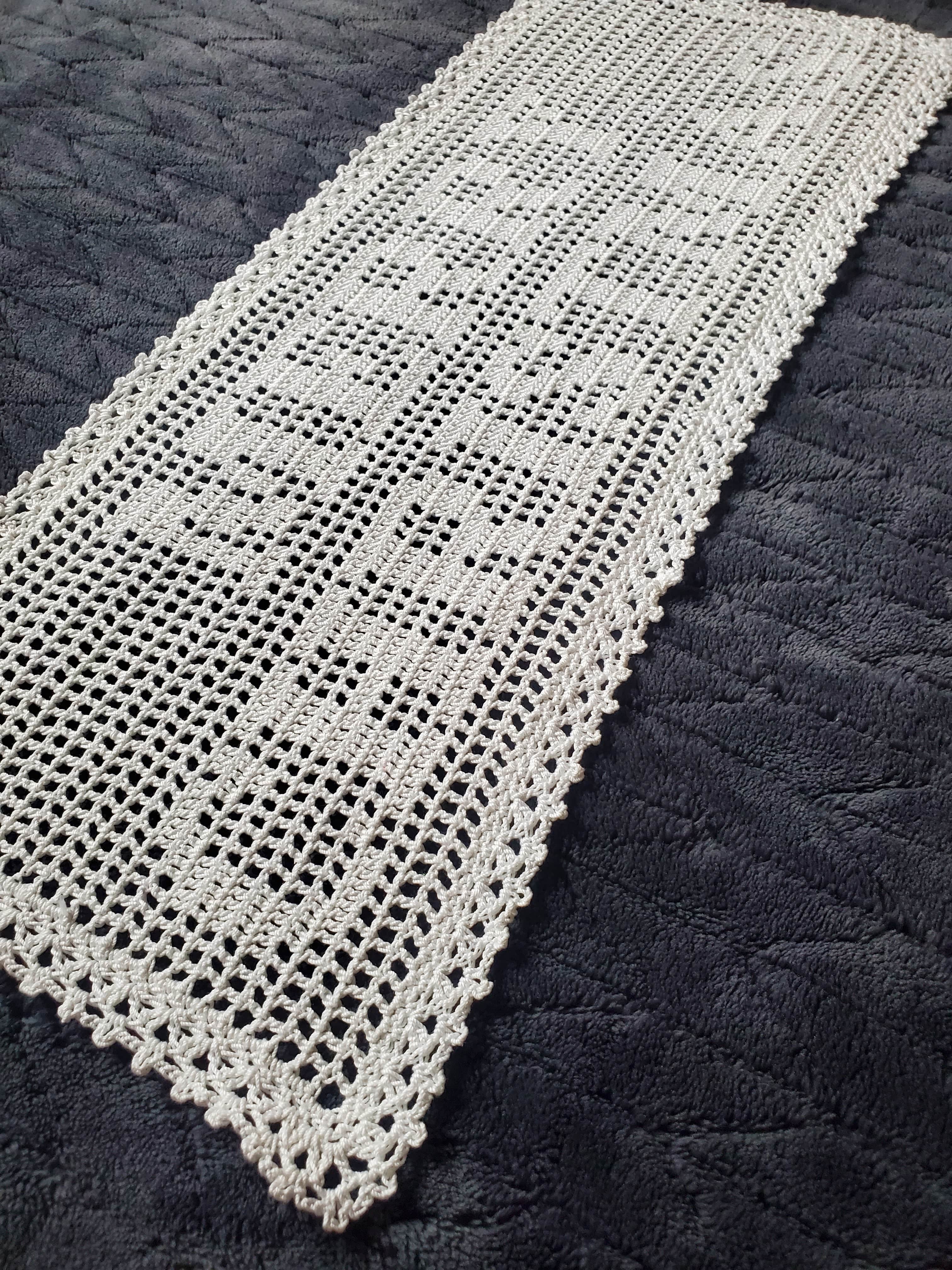
Free Peaches and Creme Crochet Burp Cloth Pattern

Hello everyone! Today I have a lovely crochet burp cloth pattern available for you! These burp cloths are made with the ever-popular Peaches and Creme cotton yarn. I honestly think they look so bright and clean!

Make These For A Wonderful Handmade Gift!

Aside from making these for yourself, this can be a thoughtful gift that can be given to a variety of individuals or institutions. Here are some ideas of who would appreciate receiving these crochet burp cloths as a gift:

  • Expectant or New Parents – Gifting crochet burp cloths to expectant or new parents can be a wonderful gesture. They’re a practical item for newborns and the fact that it’s handmade adds a personal and heartfelt element to the gift (I’ve almost cried over handmade gifts given for my babies because they were so thoughtful…darn hormones!).
  • Baby Showers and Gift Exchanges – If you’re invited to a baby shower or participating in a gift exchange, and have the crochet skills, these burp cloths can be an excellent choice. Your handmade gift will be unique, as no one can find one in stores, and hopefully new parents will appreciate the practicality and charm of it!
  • Churches, Charitable Organizations or Hospitals – If you enjoy crocheting for a cause, consider donating your handmade crochet burp cloths to a church, charitable organizations or local hospitals. Many organizations support families in need and your beautiful gift can provide comfort and absorbency to babies from these families. I worked at a hospital that accepted crochet donations (blankets, hats, and bereavement items for stillborns). 

Why Cotton Yarn is a Good Choice for a Burp Cloth:

Feel free to use any yarn you’d like, as long as it’s #4 worsted weight (medium) yarn. If you use a different weight, your burp cloth may become too big or small! I also like using cotton yarn instead of acrylic yarn . 

You can use acrylic, but it’s not very absorbent, and you should try to soften it up before using it on a baby’s delicate skin. 

Here are a few reasons why cotton yarn is a good choice for this crochet project:

  • Softness against baby’s skin – Cotton is renowned for its exceptional softness, making it a great choice for crocheted baby items. You want material that is gentle and non-irritating during use.
  • Absorbency – One of the primary uses for a burp cloth is to absorb spit-ups, drool, and other small spills. Cotton yarn excels in this aspect as it has excellent absorbent properties. The natural fibers in cotton can hold up to 27 times its own weight, making it readily able to soak up spills to keep you, and baby, dry and clean.
  • Breathability – Cotton is a breathable material, allowing air to circulate freely through the fabric. This can help prevent your baby from overheating. The breathability of cotton ensures that the moisture absorbed by the burp cloth evaporates quickly, reducing the chances of discomfort or rashes from trapped moisture.
  • Easy to clean – Babies are notorious for creating messes, and burp cloths are no exception. Choosing a material that is easy to clean is essential. Cotton yarn is machine washable, making it a convenient choice for busy parents. Simply toss the burp cloths into a washing machine, and they will come out fresh and clean, ready to be used again.
  • Durability – Burp cloths undergo frequent washing and heavy use, so durability is an important factor to consider. Cotton yarn is known for its strength and longevity, the natural fibers make it highly resilient and able to withstand repeated washing and drying.

This Peaches and Creme Crochet Burp Cloth is designed to be beginner-friendly, making it accessible to both seasoned crocheters and those that are new. With just a few basic stitches, you’ll be able to whip up these beautiful burp cloths in no time! 

We’ll be using a stitch pattern called the Suzette Stitch today. The suzette stitch combines single and double crochet stitches in a simple, but unique way to achieve its distinct texture. The alternating single and double crochets create a balanced pattern that is visually appealing and functional, and the subtle texture provides a gentle surface that can help catch and absorb liquids. 

Here’s a close up of the texture we’ll be making in each color:

Texture in Mint
Mint
Burp Cloth Texture in Royal
Royal
Texture in Ecru
Ecru

Alright, let’s grab our hooks and our favorite colored Peaches and Creme colors and dive on in!

Related Posts:

Please note that some of these links are affiliate links. That means that if you click on these links and make a purchase, I may receive a commission at no extra cost to you. You can find more information about our disclosure policy here. Thank you for your support.

Materials Needed:

Abbreviations Used:

Please note these are in US terms, not UK.

  • Ch – chain
  • St(s) – stitch(es)
  • Sl st – slip stitch
  • Sc – single crochet
  • Dc – double crochet

Size:

  • 7 in x 17 in (this will vary depending on your tension)

Peaches and Creme Crochet Burp Cloth Pattern:

Ch 21

  • Row 1: Make 1 sc into second ch from hook, 1 dc into the same ch, *skip 1 ch, (1 sc and 1 dc) into next ch* repeat from *to.* Your last ch should end up with a (1 sc and 1 dc) worked into it. (20 sts)
  • Row 2: Ch 1 (does not count as a st), turn, *skip 1 st and work (1 sc and 1 dc) into the next st (this should be the sc from the previous row)*. Repeat from *to* (20 sts)

Row 3-46: Repeat Row 2.

Border: Ch 1, turn, 2 sc in first st, 1 sc in each st across, 2 sc in last st (the corner), turning down the long side of the burp cloth, sc all the way to the next corner. I found that placing 2 sc into each leg or “bump” of the dc, then skipping the ch 1’s gave the cleanest edge. 2 sc in next corner st. Continue until last st, sl st into first st.

Cut yarn with scissors, weave in ends with tapestry needle.

Sc placement for border
Try to sc here.

That’s all! Thank you for checking out this Peaches and Creme Crochet Burp Cloth pattern! I hope that you love these as much as I do!

Until next time!

Other Posts You May Like:

The Grim Reader: A Crochet Bookmark Pattern

Hello everyone! Today I have an exciting treat for all the bookworms and crochet enthusiasts out there. I’m thrilled to present my latest creation: The Grim Reader Bookmark. That pun made me laugh, so I had to use it to name this pattern. 

This crochet skull bookmark combines lace and literature with a touch of quirky charm. If you’re a fan of spooky tales, a lover of Gothic literature, or simply appreciate unique and eye-catching crochet bookmarks, this pattern is sure to get you inspired.

The Grim Reader Bookmark will serve as a companion for all your reading adventures and is suitable for both beginner and experienced crocheters. 

I’ve used white and black crochet thread for this pattern, but I encourage you to experiment with different colors to customize your skull bookmark according to your style and preferences.

Not only is this a fun and Gothic project for yourself, the Grim Reader also makes for a fantastic gift for fellow book lovers, teachers, librarians, or anyone who appreciates the charm of handmade bookmarks. Pair it with a book that exudes those dark academia vibes and you’ve got the best night in!

Check out the pattern below!

Related Posts:

Which one do you think looks better? I honestly like them both, but feel free to expand out and use any yarn color you like!

Please note that some of these links are affiliate links. That means that if you click on these links and make a purchase, I may receive a commission at no extra cost to you. You can find more information about our disclosure policy here. Thank you for your support.

Size:

  • After blocking, the bookmark is roughly 2.5in x 7.5 in

Materials Needed:

Abbreviations Used:

  • St(s) – stitch(es)
  • Sl St – slip stitch
  • Ch – chain
  • Sc – single crochet
  • Hdc – half double crochet
  • Dc – double crochet

Special Instructions:

  • The starting ch 2 is not considered a st.
  • The number in () indicates how many sts you should have at then end, including the chs.

The Grim Reader Bookmark Pattern:

Ch 20

  • Row 1: hdc in 3rd ch from hook, 1 hdc in each ch across (18 sts)  
  • Row 2: Turn, ch 2 (starting ch does not count as hdc for this Row or for the rest of the pattern), 1 hdc in next 2 sts, ch 4, skip 3 sts, 1 hdc in next st, ch 7, skip 6 sts, 1 hdc in next st, ch 4, skip 3 sts, 1 hdc in next 2 sts (21 sts)
  • Row 3: Turn, ch 2, 1 hdc in next 2 sts, ch 2, 1 hdc in ch 4 space, ch 2, 7 dc in ch 7 space, ch 2, 1 hdc in next ch 4 space, ch 2, 1 hdc in next 2 sts (21 sts)
  • Row 4: Turn, ch 2, 1 hdc in next 2 sts, ch 4, skip over next (ch 2 space, hdc, and ch 2 space) and 1 sc in 1st dc, ch 7, skip next 5 sts, sc in last dc, ch 4, skip over next (ch 2 space, hdc, and ch 2 space), 1 hdc in next 2 sts (21 sts)
  • Row 5: Turn, ch 2, 1 hdc in next 2 sts, ch 2, hdc in ch 4 space, ch 2, 1 sc in next sc, 7 sc in ch 7 space, 1 sc in next sc, ch 2, 1 hdc in ch 4 space, ch 2, 1 hdc in next 2 sts (23 sts)
  • Row 6: Turn, ch 2, 1 hdc in next 2 sts, ch 4, skip over next (ch 2 space, hdc, and ch 2 space), 1 sc in next 3 sts, 1 dc in next st, ch 1, skip 1 st, 1 dc in next st, 1 sc in next 3 sts, ch 4, skip over next (ch 2 space, hdc, and ch 2 space), 1 hdc in next 2 sts (21 sts)
  • Row 7: Turn, ch 2, 1 hdc in next 2 sts, ch 1, 1 hdc in ch 4 space, ch 1, 1 hdc in 1st sc, ch 7, sc in ch 1 space, ch 7, 1 hdc in last sc, ch 1, 1 hdc in ch 4 space, ch 2, 1 hdc in next 1 sts (27 sts)
  • Row 8: Turn, ch 2, 1 hdc in next 2 sts, ch 2, skip over next (ch 1 space, hdc, ch 1 space), 1 sc in next hdc, 7 sc in 1st ch 7 space, 7 sc in 2nd ch 7 space, 1 sc in next hdc, ch 2, skip over next (ch 1 space, hdc, ch 1 space), 1 hdc in next 2 sts (24 sts)
  • Row 9: Turn, ch 2, 1 hdc in next 2 sts, ch 2, skip ch 2 space, skip 1st sc, 1 sc in next 6 sts, skip next 2 sts, 1 sc in next 6 sts, ch 2, skip ch 2 space, 1 hdc in next 2 sts (20 sts)
  • Row 10: Turn, ch 2, 1 hdc in next 2 sts, ch 1, hdc in ch 2 space, ch 1, skip 1st sc, 1 sc in next 10 sts, skip last sc, ch 1, hdc in ch 2 space, ch 1, 1 hdc in next 2 sts (20 sts)
  • Row 11: Turn, ch 2, 1 hdc in next 2 sts, ch 4, skip over next (ch 1 space, hdc, ch 1 space), skip next 2 sc, 1 sc in next 6 sts, ch 4, skip over next (ch 1 space, hdc, ch 1 space), 1 hdc in next 2 sts (20 sts)
  • Row 12: Turn, ch 2 1 hdc in next 2 sts, ch 2, hdc in ch 4 space, ch 3, skip 1st sc, 1 sc in next 4 sts, ch 3, skip last sc, hdc in ch 4 space, ch 2, 1 hdc in next 2 sts (20 sts)
  • Row 13: Turn, ch 2, 1 hdc in next 2 sts, 1 hdc in ch 2 space, 1 hdc in next hdc, 2 hdc in ch 3 space, ch 6, skip next 4 sts, 2 hdc in ch 3 space, 1 hdc in next hdc, 1 hdc in ch 2 space, 1 hdc in next 2 sts (18 sts)
  • Row 14: Turn ch 2, 1 hdc in next 6 sts, 6 hdc in ch 6 space, 1 hdc in next 6 sts (18 sts)

Repeat Rows 1-14 two more times for a total of 3 skull motifs. 

DO NOT CUT YARN.

Border: Ch 1, sc in same st, ch 1, sc again in same st, going down the side of the bookmark, sc into the top of each hdc and the “leg” of each hdc. (sc, ch 1, sc) in corner st. I had 63 sts down each long side, and 18 sts on the short side, not including the two corner sts. Join with a sl st in ch 1 space. 

Cut yarn with scissors, weave in end with tapestry needle.    

Blocking: This is an optional step, but I recommend blocking your bookmark after weaving in your ends. I like to soak my projects in water for about a minute, then dry it with a towel by gently patting it dry (don’t wring it out), and pinning it to a pizza or a cardboard box to dry. To make the bookmark straight, mark with a ruler a few lines to help you when you pin. 

You can use this blocking board from Boye, it’s awesome because you can interlock them, so if you need a bigger area to block you can customize your space, AND it has lines already on it.

I hope that the Grim Reader bookmark will add a touch of macabre charm during your reading adventures, and be a reminder that crochet and books can intertwine in wonderful ways!

Thanks for reading, until next time!

Other Posts You May Like:

Crochet Pokemon Hat – Pokeball (1-3 Months)

Hey everyone, today I have a Crochet Pokeball Hat Pattern for you!

Are you a fan of Pokemon and looking for a fun way to show off your love for the popular franchise on your little baby? Look no further than this Pokeball-inspired crochet hat! This pattern combines the classic look of a winter hat with the iconic design of a Pokeball, making it the perfect accessory for any Pokemon loving parent. 

Whether you’re braving the cold on a winter day or heading to a Pokemon-themed event with your little one, this hat is sure to turn heads and showcase your love for the game. With easy-to-follow instructions and a simple colorwork design, this pattern is suitable for crocheters of all skill levels. So grab your hooks and yarn, and let’s get started creating your own crochet Pokeball hat!

Be sure to check out some of these other Pokemon Crochet patterns I’ve made!
How Do I Put an Image on a Crochet Hat?

I’ve been curious as to how to put an image on a crochet hat myself, and I think I’ve FINALLY cracked the code. I use the free chart making website, Stitch Fiddle, to do this.

I make an image on Stitch Fiddle, in this case the Pokeball, and I substitute each square on the chart as 1 single crochet in the hat. 

Now, you have to make sure that your image isn’t very big or you’ll have a ginormous, wonky looking crochet hat. Single crochets are also the only way to get your image to work without it getting too distorted (half double crochets and double crochets will make the image too “skinny”). Single crochets have a 1:1 ratio, meaning that they are as tall as they are wide.

I also think it’s best to get an idea of how big your hat needs to be by crocheting until you’ve reached your desired crown diameter and then single crochet a short row (like only make 3 or 4 single crochets, turn and ch 1, etc.) on the hat until you’ve reached the appropriate length for your crown diameter size. 

Look at the amount of rows you single crocheted until the desired length and then count how many you have. That is how many squares long your image can be. The total amount of single crochets you have after you’ve reached your crown diameter is how wide your image can be. 

In the case of the Crochet Pokeball Hat Pattern, I’ve increased until I had a total of 56 stitches. Measured out, I was able to have about 14 rows or 14 squares high to fit an image before the hat would be too long.The Pokeball image is 12 squares high and 12 squares wide, which was the perfect size to fit an image in the middle of the crochet hat.

What is the Crown Diameter and How Do I Find It for My Hat?

The crown diameter is how wide your hat needs to be before you start lengthening. You crochet by increasing stitches in every round until you reach your crown diameter.

It seems like many crochet hat chart sizes have different recommendations for crown diameter and length based on age. To obtain a truly accurate measurement, obtain your head circumference with a tape measure or a piece of string (and then measure the string on a ruler). Take your head circumference number and divide it by 3.14, this is your crown diameter.  

Will this Pattern Work for Other Hat Sizes?

Yes, the Crochet Pokeball Hat technically can be worked for other head sizes (except for newborn). The pattern I have available is made for a 1-3 month old…but you can increase until you hit your crown diameter (as explained above), and use the chart below to place your pokeball, but increase on each side of the pokeball to accommodate the increase in total stitches. You will also have to add a few more rounds below the pokeball to obtain an appropriate length. 

How Do I Change Yarn Colors?

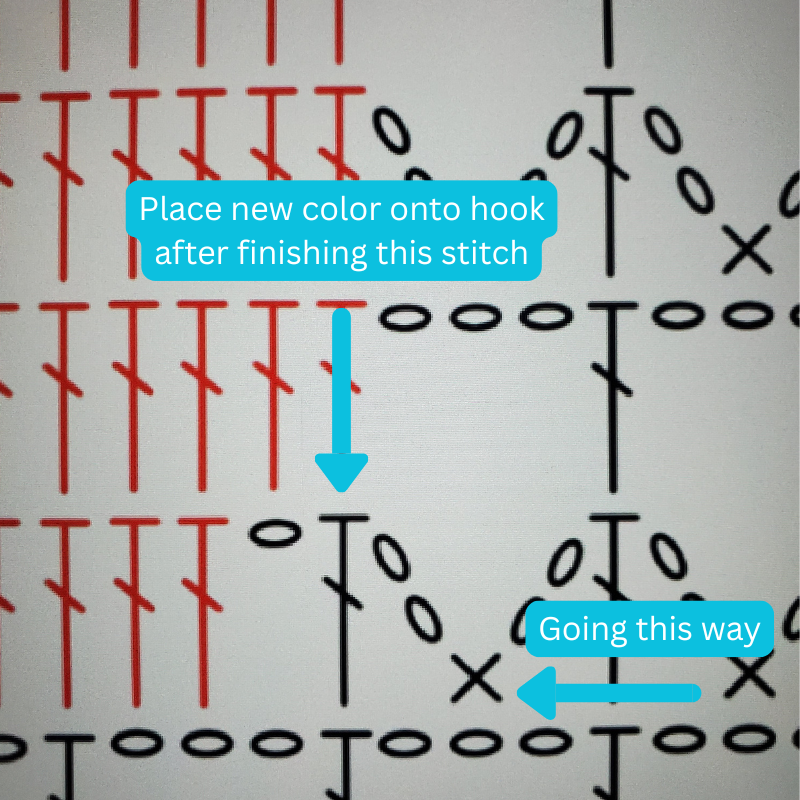
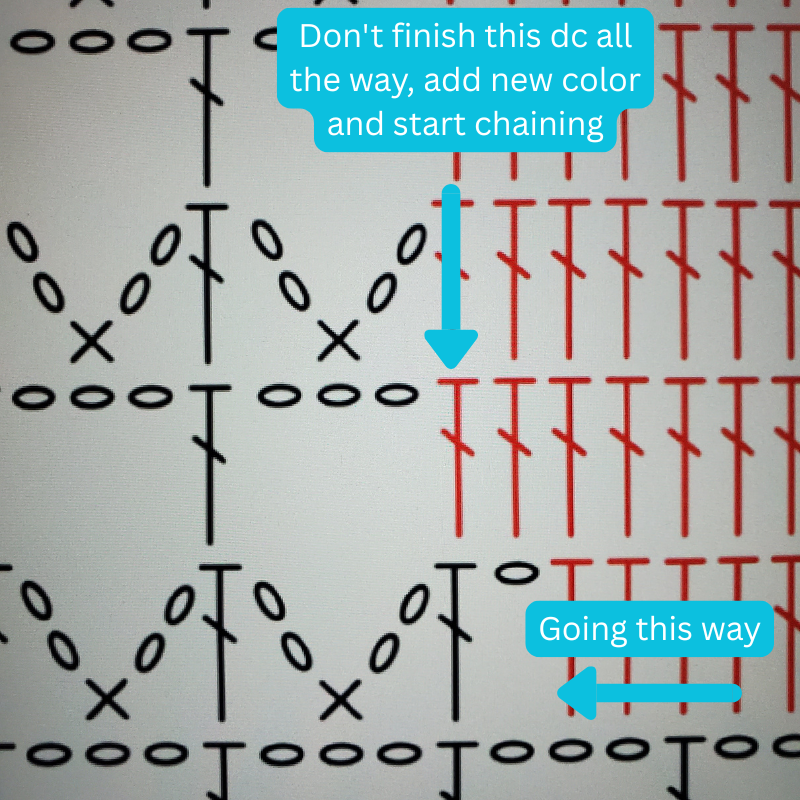
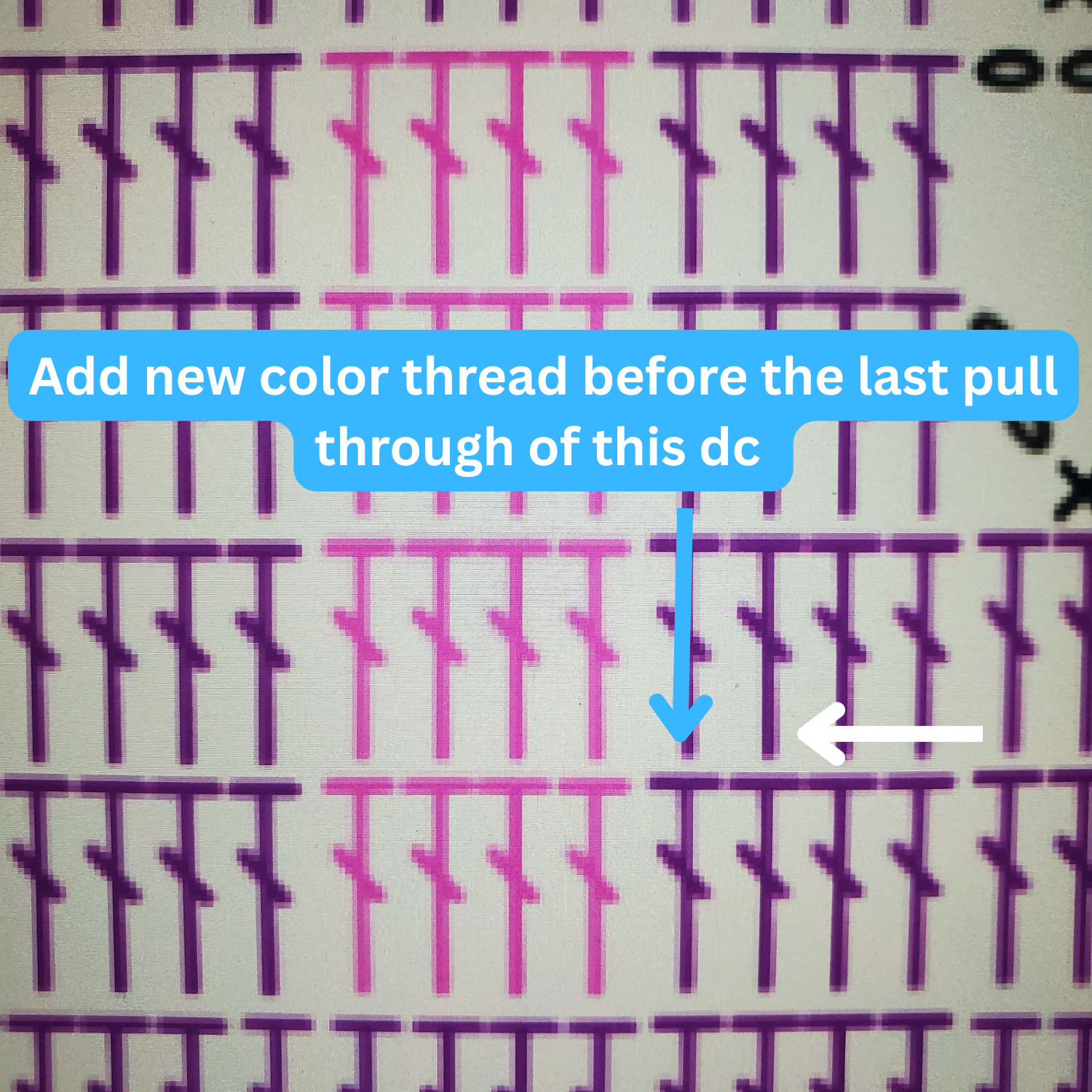
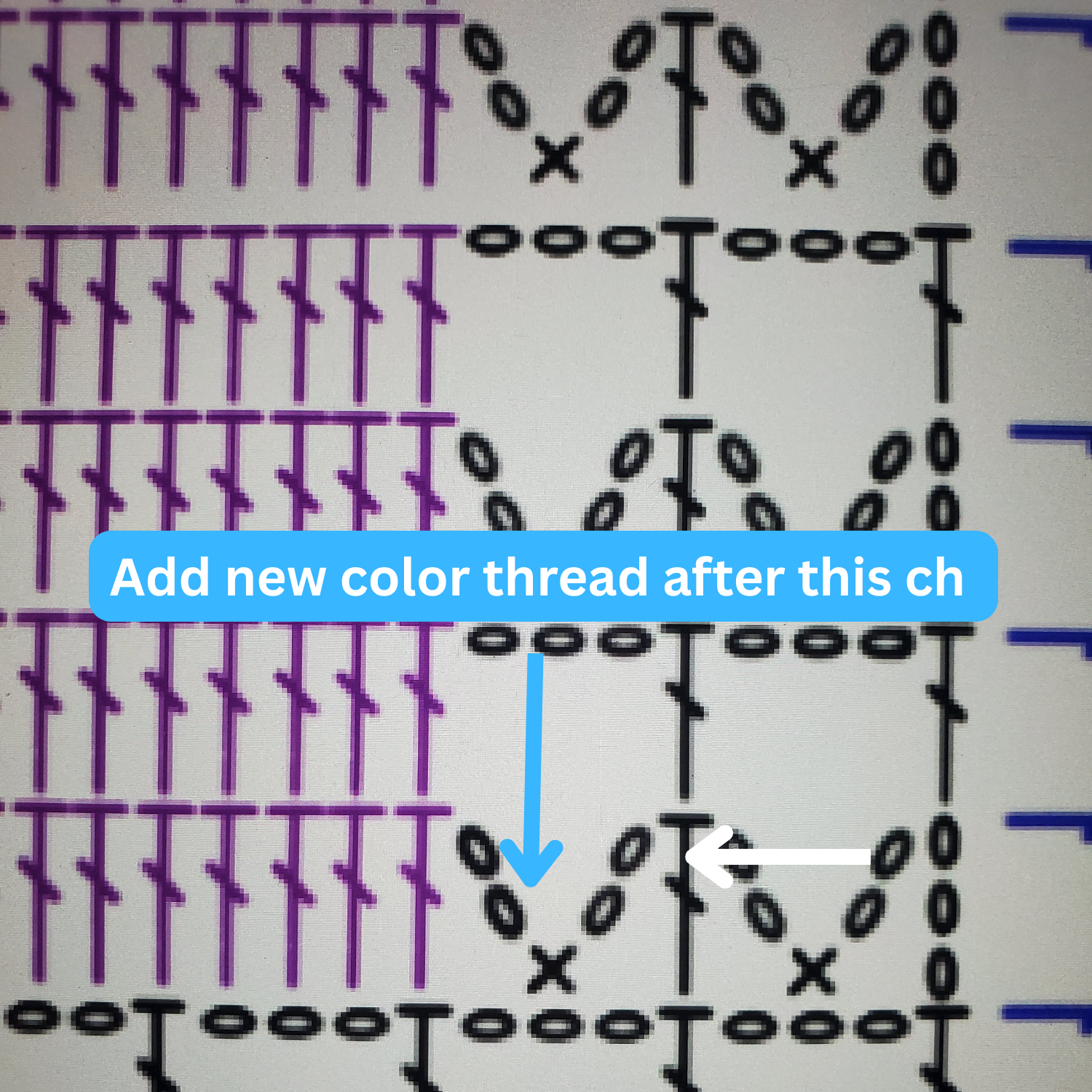
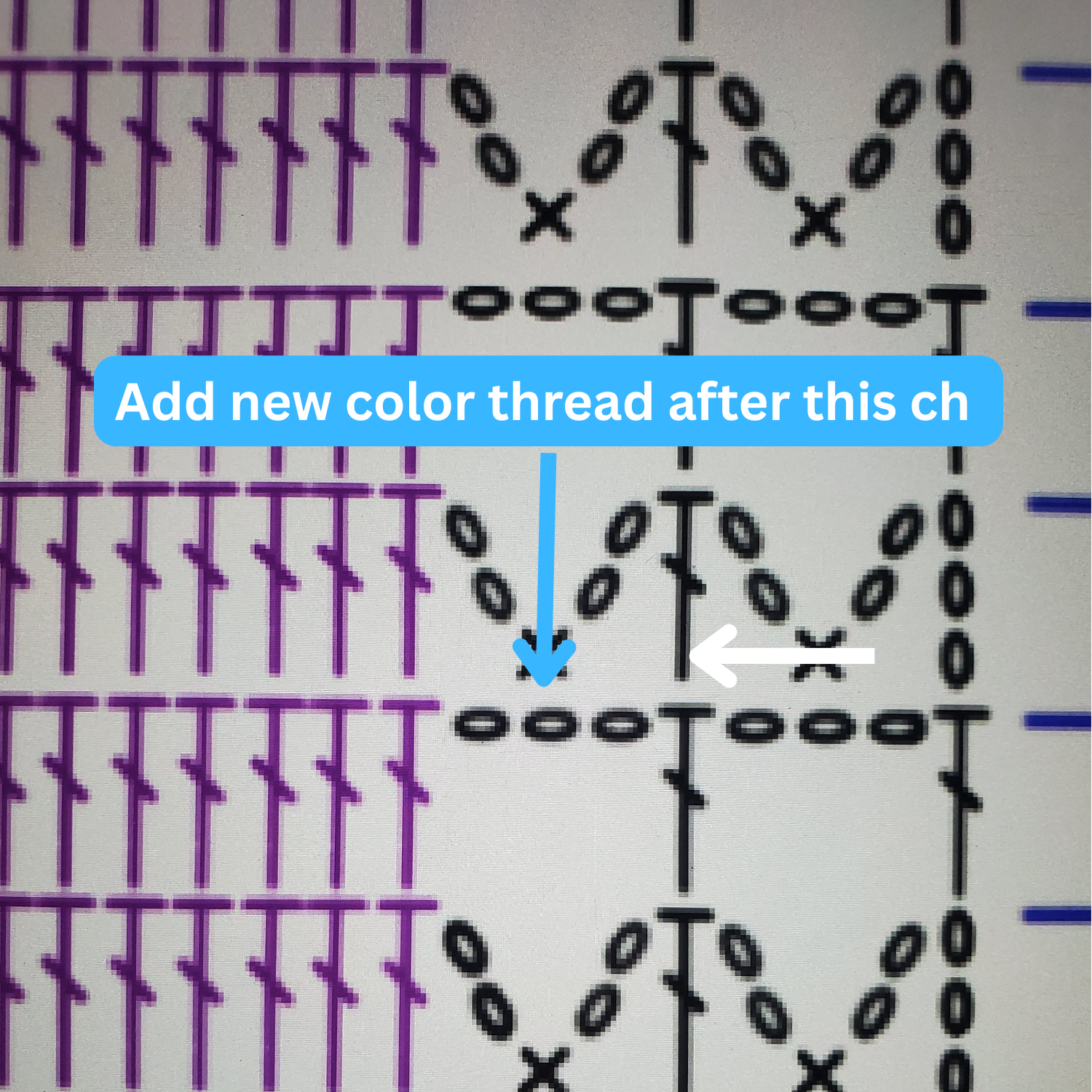
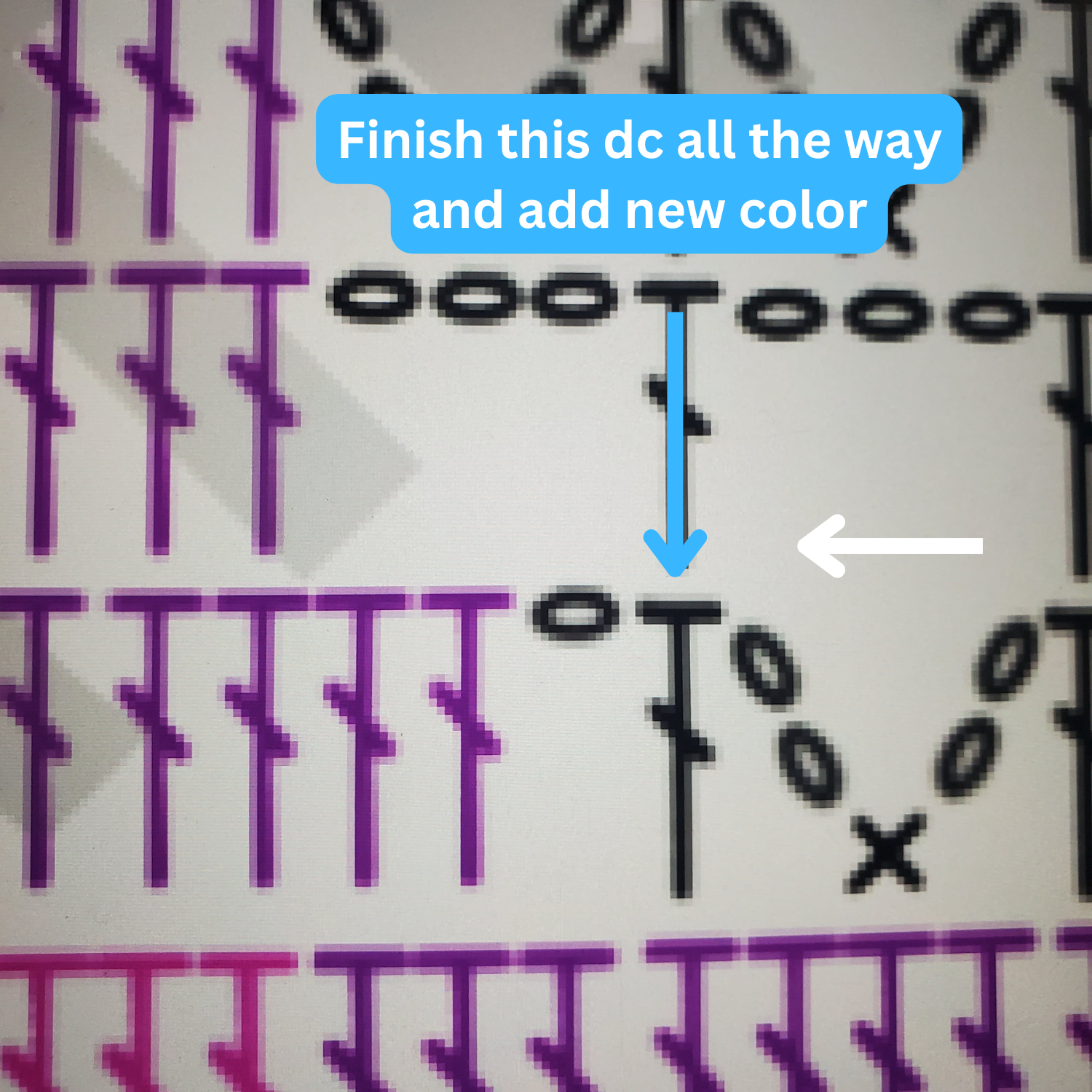
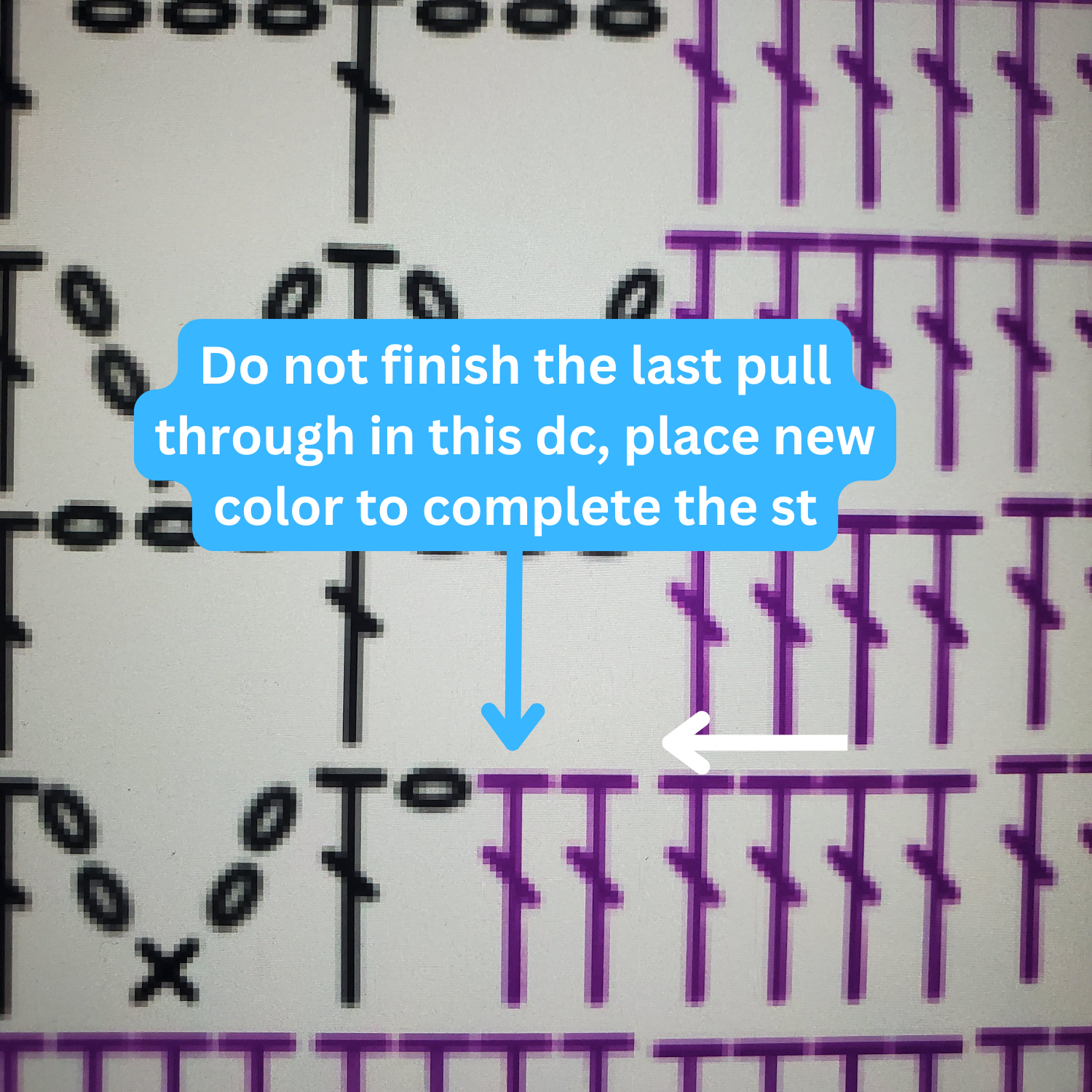
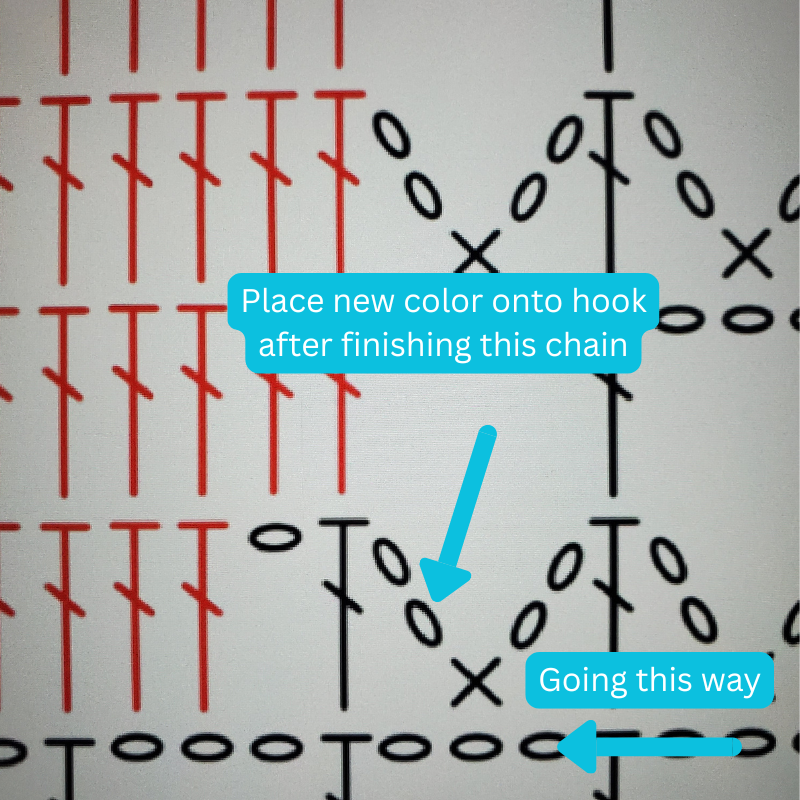
Switch yarn colors the square before the needed color change. This post explains how to color change the right way for this crochet hat pattern. You want to single crochet up to the square before the color change, but don’t finish it all the way! Place the new color on your hook and pull through, proceed to crochet with the new color.

Please note that some of these links are affiliate links. That means that if you click on these links and make a purchase, I may receive a commission at no extra cost to you. You can find more information about our disclosure policy here. Thank you for your support.

Hat Size: 

Crown diameter is 4.5 inches and length is 5.25 inches (not including the pom pom). Size may vary depending on your tension and if you use a different yarn/hook size.

Materials Needed: 

Abbreviations Used:

Please note these are in US terms, not UK.

  • St(s) – stitch(es)
  • Ch – chain
  • Sc – single crochet
  • Sc2tog – single crochet two stitches together
  • STW – switch to white yarn
  • STB – switch to black yarn
  • STR – switch to red yarn

Special Instructions:

  • The beginning ch 1 does not count as a st.
  • Rounds are worked by turning after each completed round. This makes it easier to carry the yarn colors with you back and forth.
  • The number in () at the end of the round, indicates how many stitches you should have completed. 

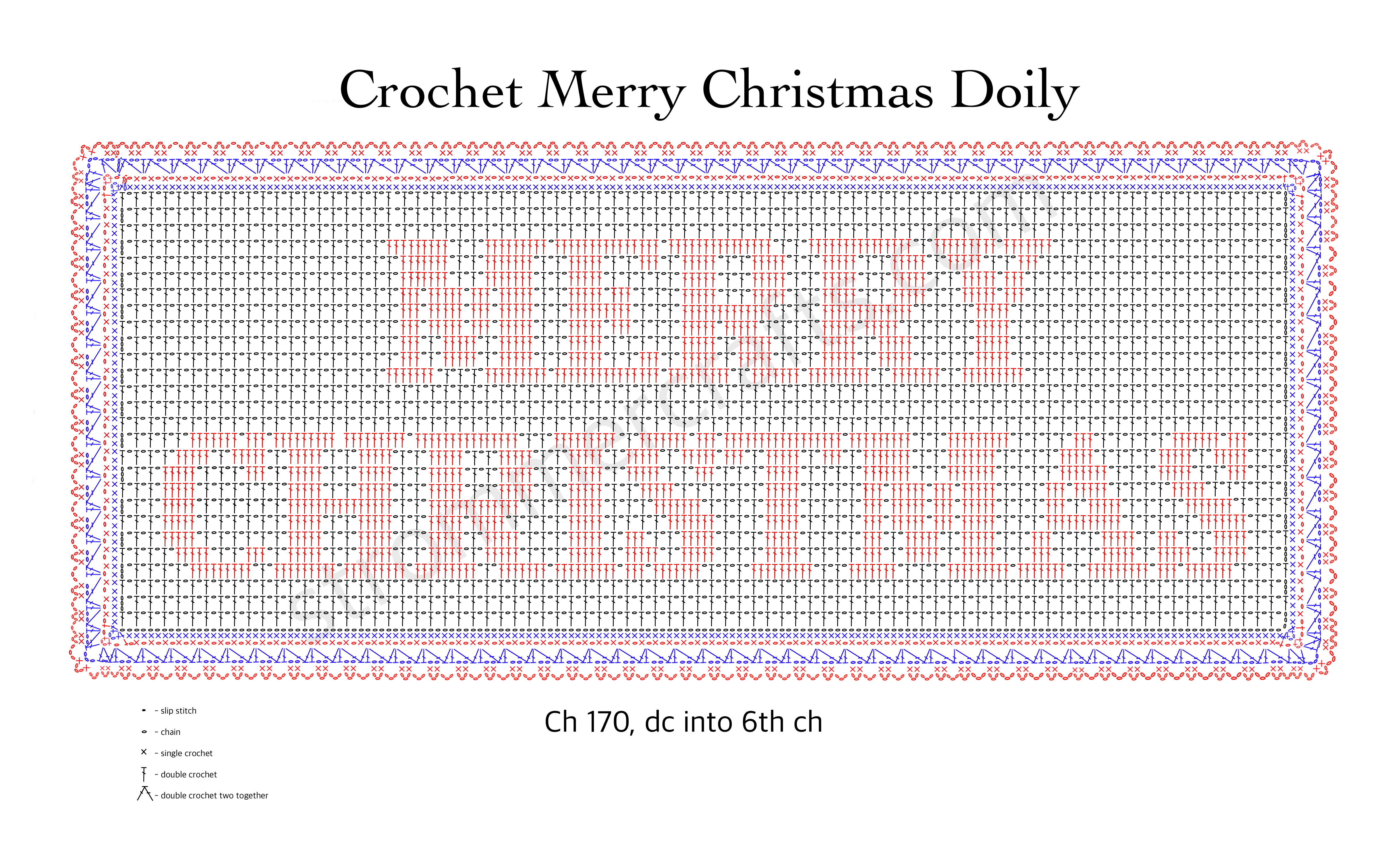
Here is the image of the chart I used to make the hat:

Crochet Pokeball Hat (1-3 months)

With white yarn

  • Round 1: 8 sc in mc, sl st into first st (8 sts)
  • Round 2: Ch 1, 2 sc in each st around, sl st into first st (16 sts)
  • Round 3: Ch 1, 2 sc in next st, 1 sc in next st around, sl st into first st (24 sts)
  • Round 4: Ch 1, 2 sc in next st, 1 sc in next 2 sts around, sl st into first st (32 sts)
  • Round 5: Ch 1, 2 sc in next st, 1 sc in next 3 sts around, sl st into first st (40 sts)
  • Round 6: Ch 1, 2 sc in next st, 1 sc in next 4 sts around, sl st into first st (48 sts)
  • Round 7: Ch 1, 2 sc in next st, 1 sc in next 5 sts around, sl st into first st (56 sts)
  • Round 8: Ch 1, 1 sc in next 26 sts, STB, 1 sc in next 4 sts, STW, 1 sc in next 26 sts, sl st into first st (56 sts)
  • Round 9: Ch 1, 1 sc in next 24 sts, STB, 1 sc in next 2 sts, STR, 1 sc in next 4 sts, STB, 1 sc in next 2 sts, STW, 1 sc in next 24 sts, sl st into first st (56 sts)
  • Round 10: Ch 1, 1 sc in next 23 sts, STB, 1 sc in next st, STR, 1 sc in next 8 sts, STB, 1 sc in next st, STW, 1 sc in next 23 sts, sl st into first st (56 sts)
  • Round 11: Repeat round 10. (56 sts)
  • Round 12: Ch 1, 1 sc in next 22 sts, STB, 1 sc in next st, STR, 1 sc in next 10 sts, STB, 1 sc in next st, STW, 1 sc in next 22 sts, sl st into first st (56 sts)
  • Round 13: Ch 1, 1 sc in next 22 sts, STB, 1 sc in next st, STR, 1 sc in next 4 sts, STB, 1 sc in next 2 sts, STR, 1 sc in next 4 sts, STB, 1 sc in next st, STW 1 sc in next 22 sts, sl st into first st (56 sts)
  • Round 14: Ch 1, 1 sc into next 22 sts, STB, 1 sc in next 2 sts, STR, 1 sc in next 2 sts, STB, 1 sc in next st, STW, 1 sc in next 2 sts, STB, 1 sc in next st, STR, 1 sc in next 2 sts, STB, 1 sc in next 2 sts, STW, 1 sc in next 22 sts, sl st into first st (56 sts)
  • Round 15: Ch 1, 1 sc into next 22 sts, STB, 1 sc in next st, STW, 1 sc in next st, STB, 1 sc in next 3 sts, STW, 1 sc in next 2 sts, STB, 1 sc in next 3 sts, STW, 1 sc in next st, STB, 1 sc in next st, STW, 1 sc in next 22 sts, sl st into first st (56 sts)
  • Round 16: Ch 1, 1 sc in next 23 sts, STB, 1 sc in next st, STW, 1 sc in next 3 sts, STB, 1 sc in next 2 sts, STW, 1 sc in next 3 sts, STB, 1 sc in next st, STW, 1 sc in next 23 sts, sl st into first st (56 sts)
  • Round 17: Ch 1, 1 sc in next 23 sts, STB, 1 sc in next st, STW, 1 sc in next 8 sts, STB, 1 sc in next st, STW, 1 sc in next 23 sts, sl st into first st (56 sts)
  • Round 18: Ch 1, 1 sc in next 24 sts, STB, 1 sc in next 2 sts, STW, 1 sc in next 4 sts, STB, 1 sc in next 2 sts, STW, 1 sc in next 24 sts, sl st into first st (56 sts)
  • Round 19: Ch 1, 1 sc in next 26 sts, STB, 1 sc in next 4 sts, STW, 1 sc in next 26 sts, sl st into first st (56 sts)
  • Round 20: Ch 1, 1 sc in next 5 sts, sc2tog around, sl st into first st (48 sts)
  • Round 21: Ch 1, 1 sc in next 4 sts, sc2tog around, sl st into first st (40 sts)

Cut yarn with scissors, weave in ends with tapestry needle.  

Pom Pom:

  • To make a pom pom out of yarn, cut a long length of yarn (about 12 inches or so) and set aside. 
  • Wrap the yarn around four fingers about 70 times (or until you’re happy with the thickness of your pom pom). 
  • Carefully slide the yarn off your fingers and onto the string of yarn you cut first. Tie the yarn tightly around the bulk of the yarn you wrapped. 
  • Use your scissors to cut the loops made on both sides. Trim up any long pieces.
  • Sew the pom pom into the center of the hat with tapestry needle.

Thank you very much for checking out the Crochet Pokeball Hat Pattern! I hope that you enjoyed making this fun and whimsical hat. I can’t wait to see all of your amazing creations! Be sure to tag me @strommercrafts 🙂

Other Posts You May Like:

Crochet Veil Pattern – Little Leaf Trellis

Hello everyone, I hope you have had a lovely spring so far. Today I have another beautiful crochet veil pattern for you, the Little Leaf Trellis Veil! 

This lacy crochet veil is created with chains and little “leaves.” After a few rows worked, it really does look like a pretty trellis.

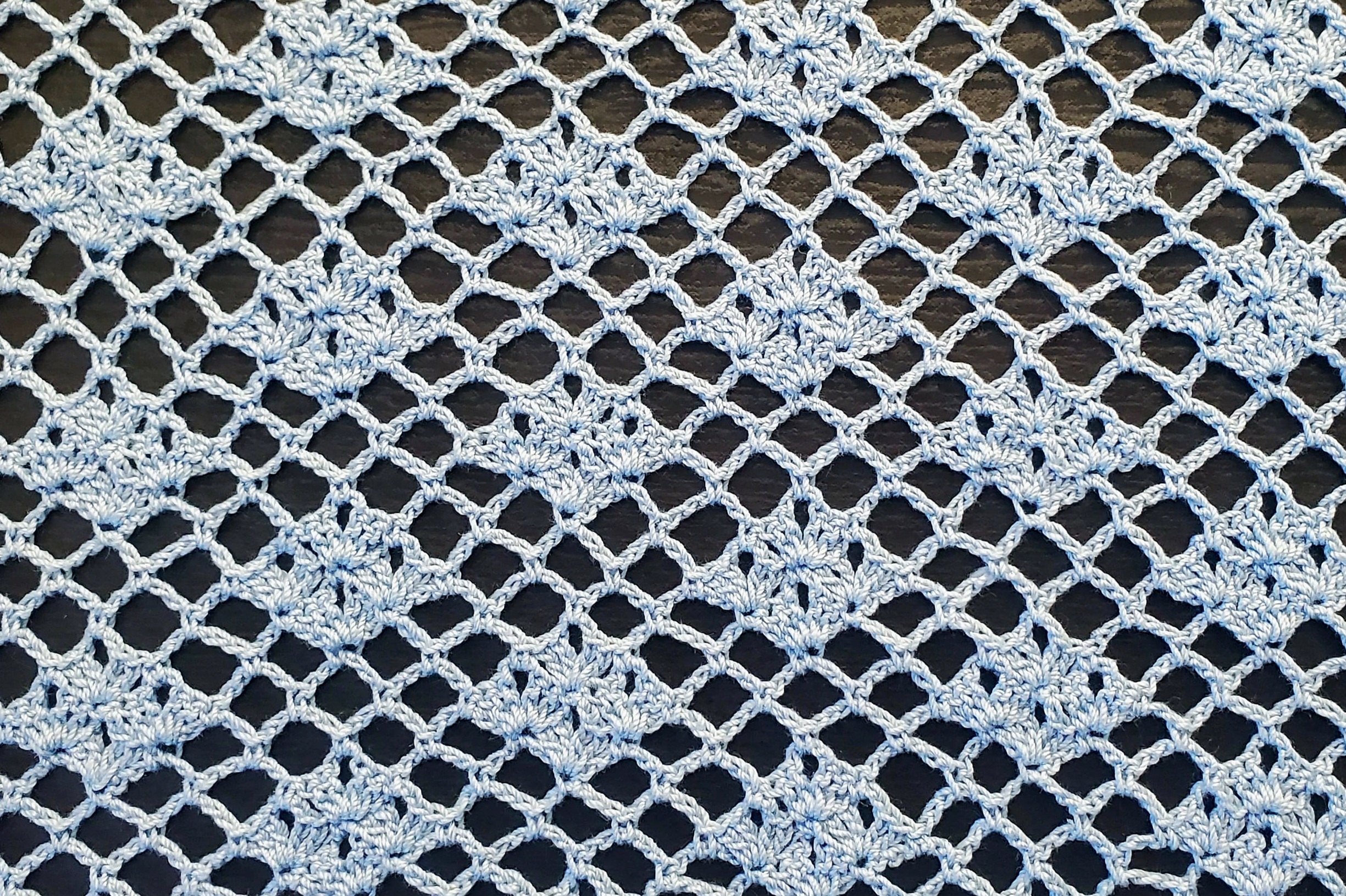
Here’s a close up of the pattern:

As always, these crochet veil projects tend to take a while to finish (at least if you’re like me and devote an hour or two a day). This one took me about a month to finish, but this depends on your length and size.

Check Out These Other Crochet Veil Patterns:

The Little Leaf Trellis crochet veil is sewed into an infinity style veil. I usually just take both ends of the veil, line them up as straight as possible, and slip stitch my way down to sew it in place. You can easily adjust to the length you need in the foundation row. The formula is a series of 12 chains, no need to add turning chains for this one.

Need help sizing your veil? 

Take your foundation row and drape it loosely over your head. Bring the ends together and add more or less chains. I like to have my crochet infinity veils down to my chest so it doesn’t feel too restrictive.

When and why do you wear a veil?

These veils are typically worn during Catholic Masses. Veiling during mass was the norm prior to the Vatican II counsel and was officially dropped from the new Code of Canon Law in 1983. Despite veiling no longer being required, many women still choose to implement the practice as a sign of modesty and respect at Mass.

I always try my best to make pattern instructions clear and easy to follow, if you find a mistake or need help, please make a comment below.

Okay, let’s jump into the pattern! 🙂    

Please note that some of these links are affiliate links. That means that if you click on these links and make a purchase, I may receive a commission at no extra cost to you. You can find more information about our disclosure policy here. Thank you for your support.

Materials Needed:

Abbreviations Used:

Please note these are in US, not UK terms.

  • Ch(s) – chain(s)
  • Sc – single crochet
  • Tr – treble crochet
  • Dtr – double treble crochet

Special Stitches:

  • Ch 3 Picot – chain 3, insert hook into previous sc made, and make a slip stitch. 
  • Leaf – Step 1) after chaining the specified number of chains, take your hook out and leave a loop at the top big enough to grab later, insert hook into the 6th ch away from the top. Step 2) Grab the loop you left and pull through. Step 3) Ch 6. Step 4) Make a sc into the 6th ch away from hook. 
Leaf step 1
Step 1
Leaf step 2
Step 2
Leaf step 3
Step 3
Leaf Step 4
Step 4

Little Leaf Trellis Crochet Veil Pattern:

Make a series of 12 chains until desired length is reached.

Row 1: Insert hook into 12th ch from hook and make a sc, *ch 15, skip 8 chs, make a sc in next ch, ch 5, skip 2 chs, sc into next ch.* Repeat from *to* until end.

Little Leaf Trellis Veil Row 1
Row 1

Row 2: Turn, ch 7, skip 2 chs, sc into next ch, ch 9, take hook out and insert into 6th ch away from where your hook was, grab loop at top and pull through, ch 6, insert hook into 6th ch away from hook, make a sc, insert hook into “middle of leaves” just made, and insert hook into 4th ch in the ch 15 space from previous row, make a sc, *ch 7, skip 3 chs, sc in next ch, ch 13, take hook out, insert into 6th ch away from hook, grab loop, pull through and ch 6, insert hook into 6th ch away from hook, make a sc, insert hook into “middle of leaves” just made, skip 3 chs, sc into next ch, ch 3, make a sc in 3rd ch of next ch 5 from previous row, ch 9, take hook out, insert into 6th ch away from where hook was, grab loop and pull through, ch 6, insert hook into 6th ch away from hook, make a sc, insert hook into middle of leaves, make a sc into 4th ch of next ch 15.*

Repeat from *to* until last repeat, ch 7, skip 3 chs, sc in next ch, ch 13, take hook out, insert into 6th ch away from hook, grab loop, pull through and ch 6, insert hook into 6th ch away from hook, make a sc, insert hook into “middle of leaves” just made, skip 3 chs, sc into next ch, ch 3, make a sc in 3rd ch of next ch 5 from previous row, end with ch 3, and tr into 3rd ch away. 

Little Leaf Trellis Veil Row 2
Row 2

Row 3: Turn, ch 15, skip over first set of “leaves” and sc into 4th ch of next ch 7 space, ch 5, sc into 4th ch of next ch 7 space, *ch 15, skip over next two “leaves,” sc into 4th ch of next ch 7 space, ch 5, sc into 4th ch of next ch 7 space* Repeat from *to,* end with ch 12, tr into 4th ch of last ch 7 space.

Little Leaf Trellis Veil Row 3
Row 3

Row 4: Turn, *ch 7, skip 3 chs, sc in next ch, ch 13, make a leaf (see special stitches above), skip 3 chs, sc in next ch, ch 3, sc in 3rd ch of ch 5, ch 9, make a leaf, sc into 4th ch of next ch 15 space,* Repeat from *to* until last repeat, ch 7, skip 3 chs, sc into next ch, end with ch 4, tr into 4th ch.

Crochet llt veil row 4
Row 4

Row 5: Turn, *ch 5, skip next ch 7, sc into 4th ch of next ch 7 space, ch 15, skip over next 2 leaves, sc into 4th ch in next ch 7 space.* Repeat from *to,* end with ch 5, sc into 4th ch of last ch 7 space. 

Little Leaf Trellis Veil Row 5
Row 5

Row 6: Turn, ch 7, sc into 3rd ch of next ch 5 from previous row, *ch 9 and make a leaf, sc into 4th ch of next ch 15, ch 7, skip 3 chs, sc into next ch, ch 13, make a leaf, skip 3 chs and sc into next ch, ch 3, sc into 3rd ch of next ch 5.* Repeat from *to* until end. Ch 4, dtr into top of tr from previous row.

Row 6 llt veil
Row 6

Repeat rows 3-6  

End on a Row 6 repeat

Edging:

Turn, ch 1, *3 sc into ch 5 space, ch 3 picot, 3 sc into same ch 5 space, (3 sc into next ch 15 space, ch 3 picot, 6 sc in same ch space, ch 3 picot, 6 sc in ch space, ch 3 picot, 3 sc in ch space)* Repeat from *to.*

DO NOT CUT THREAD.

Assembly:

Take both edges of the veil and line them up as evenly as possible. Insert hook into both sides and slip stitch your way down to sew into an infinity style veil. Alternatively, you can cut a long enough piece of thread and sew with your tapestry needle. Cut thread with scissors and weave in any ends with tapestry needle.

Thank you for checking out the Little Leaf Trellis Crochet Veil pattern! Until next time.

Other Posts You Might Like:  

Flower Diamond Crochet Veil Pattern

Hello everyone, today I have another free crochet veil pattern for you all…the Crochet Flower Diamond Veil! This crochet veil has a 10 petaled flower worked in a diamond shape and sewn into the infinity style. I hope you like it!

This veil pattern is created for use at Catholic mass, or at least, that’s what I use it for! Some women wear a veil during mass as an outward way to humble themselves before God. According to Fr. Anthony Dorsa from Catholic Answers, “…women are to be veiled in the presence of that which is holy, because they themselves are, in a sense, sacred.” 

As with some of my previous crochet veil patterns, this is a project that will take a little bit of time to complete. Using the tiny crochet thread makes the veil look dainty, and because of that, it’s a labor of love. I believe this veil took me about 3 weeks to finish. Of those 3 weeks, I worked on it for about 1-2 hours a day, your time may vary of course.

The Flower Diamond Crochet Veil is worked up in 10 rows and then repeated from rows 3-10 until you’ve reached your desired length. 

The veil can be adjusted in length, the repeat formula is 36+4. This means to make a series of 36 chains until you’re happy with the length and then add 4 more chains for the turning chain.

I suggest making your starting chain and then draping it over your head, while bringing the ends together to get an idea of what size you need. I like to give my veils enough room around my neck and chest area, otherwise I feel constricted.

Okay, let’s get into this beautiful crochet veil pattern!

Related Posts:

Please note that some of these links are affiliate links. That means that if you click on these links and make a purchase, I may receive a commission at no extra cost to you. You can find more information about our disclosure policy here. Thank you for your support.

Materials Needed:

Abbreviations Used:

Please note these are in US terms, not UK.

  • Ch(s) – chain(s)
  • Sc – single crochet
  • Dc – double crochet
  • Tr – treble crochet
  • Ch 3 picot – ch 3, insert hook into top of last stitch, make a slip stitch
Flower Diamond Veil Close Up

Flower Diamond Crochet Veil Pattern

Ch a repeat of 36+4 until desired length.

  • Row 1: Dc in 5th ch from hook, ch 5, skip 5 chs, 1 sc in next 5 chs, *ch 5, skip 5 chs, 1 dc in next 3 chs, ch 5, skip 5 chs, 1 sc in next 5 chs.* Repeat from *to* until 7 chs are left. Ch 5, skip 5 chs, 1 dc in last 2 chs.
Row 1
  • Row 2: Ch 3, turn, skip first dc, *dc in next dc, 1 dc in 1st and 2nd chs of next ch 5, ch 5, skip next sc, 1 sc in next 3 sc, ch 5, skip 3 chs of next ch 5, 1 dc in 4th and 5th chs, dc in next dc, ch 1, skip next dc.* Repeat from *to* until last repeat completed. Dc in next dc, 1 dc in 1st and 2nd chs of next ch 5, ch 5, skip next sc, 1 sc in next 3 sc, ch 5, 1 dc in 4th and 5th chs of next ch 5, 1 dc in next dc, 1 dc in top of turning ch from previous row.
Row 2
  • Row 3: Ch 8, turn, skip next 3 dc, *1 dc in next dc, 1 dc in 1st and 2nd chs of next ch 5, ch 3, skip next sc, tr in next sc, ch 3, skip 3 chs of next ch 5, 1 dc in 4th and 5th chs, 1 dc in next dc, ch 4, tr in next ch 1 space, ch 4, skip next 2 dc.* Repeat from *to* until last repeat completed. 1 dc in next dc, 1 dc in 1st and 2nd chs of next ch 5, ch 3, skip next sc, tr in next sc, ch 3, skip 3 chs of next ch 5, 1 dc in 4th and 5th chs, 1 dc in next dc, ch 4, tr in top of ch 3 turning ch from previous row.
Row 3
  • Row 4: Ch 1, turn, skip tr, sc in 1st ch of next ch 4, *ch 4, skip next 2 dc, 1 dc in next dc, 2 dc in next ch 3 space, ch 1, skip tr, 2 dc in next ch 3 space, 1 dc in next dc, ch 4, skip next 2 dc and 3 chs in next ch 4 space, sc in 4th ch, sc in tr, sc in 1st ch in next ch 4 space.* Repeat from *to* until last repeat completed. Ch 4, skip next 2 dc, 1 dc in next dc, 2 dc in next ch 3 space, ch 1, skip tr, 2 dc in next ch 3 space, 1 dc in next dc, ch 4, skip next 2 dc, skip 3 chs of previous rows turning ch, 1 sc in next 2 chs.
Row 4
  • Row 5: Ch 1, turn, skip 1st sc, sc in next sc, sc in 1st ch of next ch 4 space, *ch 5, skip next 2 dc, dc in next dc, dc in ch 1 space, dc in next dc, ch 5, skip next 2 dc, skip 3 chs of next ch 4 space, sc in next ch, 1 sc in next 3 sc, 1 sc in 1st ch of next ch 4 space.* Repeat from *to* until until last repeat completed. Ch 5, skip next 2 dc, dc in next dc, dc in ch 1 space, dc in next dc, ch 5, skip next 2 dc, skip next 3 chs of next ch 4 space, sc in next ch, sc in next sc, sc in ch 1 turning ch from previous row.
Row 5
  • Row 6: Ch 1, turn, skip 1st sc, sc in next sc, skip next sc, *ch 5, skip 3 chs of next ch 5 space, dc in 4th and 5th chs, dc in next dc, ch 1, skip dc, dc in next dc, dc in 1st and 2nd chs of next ch 5 space, ch 5, skip next sc, 1 sc in next 3 sc, skip next sc.* Repeat from *to* until last repeat completed, ch 5, skip 3 chs of next ch 5 space, dc in 4th and 5th chs, dc in next dc, ch 1, skip dc, dc in next dc, dc in 1st and 2nd chs of next ch 5 space, ch 5, skip next sc, sc in next sc, sc in ch 1 turning ch from previous row.
Row 6
  • Row 7: Ch 7, turn, skip next 2 sc and 3 chs of next ch 5 space, dc in 4th and 5th chs, *dc in next dc, ch 4, skip next 2 dc, tr in ch 1 space, ch 4, skip next 2 dc, dc in next dc, dc in 1st and 2nd chs of next ch 5 space, ch 3, skip next sc, tr in next sc, ch 3, skip next sc, skip 3 chs of next ch 5 space, dc in 4th and 5th chs.* Repeat from *to* until last repeat completed, dc in next dc, ch 4, skip next 2 dc, tr in ch 1 space, ch 4, skip next 2 dc, dc in next dc, dc in 1st and 2nd chs of next ch 5 space, ch 3, skip next sc, tr in ch 1 turning ch of previous row
Row 7
  • Row 8: Ch 3, turn, 2 dc in ch 3 space, dc in next dc, *ch 4, skip next 2 dc and 3 chs of next ch 4 space, sc in 4th ch, sc in tr, sc in 1st ch of next ch 4 space, ch 4, skip next 2 dc, dc in next dc, 2 dc in next ch 3 space, ch 1, skip tr, 2 dc in next ch 3 space, dc in next dc.* Repeat from *to* until last repeat completed, ch 4, skip next 2 dc and 3 chs of next ch 4 space, sc in 4th ch, sc in tr, sc in 1st ch of next ch 4 space, ch 4, skip next 2 dc, dc in next dc, 3 dc in ch 7 turning ch from previous row.
Row 8
  • Row 9: Ch 3, turn, skip 1st dc, dc in next dc, *ch 5, skip 3 chs of next ch 4 space, sc in 4th ch, sc in next 3 sc, sc in 1st ch of next ch 4 space, ch 5, skip next 2 dc, dc in next dc, dc in ch 1 space, dc in next dc, skip next 2 dc.* Repeat from *to* until last repeat completed, ch 5, skip 3 chs of next ch 4 space, sc in 4th ch, sc in next 3 sc, sc in 1st ch of next ch 4 space, ch 5, skip next 2 dc, dc in next dc, dc in top of ch 3 turning ch from previous row.
Row 9
  • Row 10: Ch 3, turn, skip 1st dc, *dc in next dc, dc in 1st and 2nd ch of next ch 5 space, ch 5, skip next sc, sc in next 3 sc, ch 5, skip next sc and 3 chs of next ch 5 space, dc in 4th and 5th chs, dc in next dc, ch 1, skip next dc.* Repeat from *to* until last repeat completed, dc in next dc, dc in 1st and 2nd ch of next ch 5 space, ch 5, skip next sc, sc in next 3 sc, ch 5, skip next sc and 3 chs of next ch 5 space, dc in 4th and 5th chs, dc in next dc, dc in top of ch 3 turning ch from previous row.

Repeat rows 3-10 until desired length. End after a row 3 repeat. 

Row 10
  • Edging: Ch 1, turn, *sc in tr, 2 sc in next ch space, ch 3 picot, 2 sc in same ch space, sc in next 3 dc, 2 sc in next ch space, ch 3 picot, 2 sc in same ch space.* Repeat from *to* until end. 

DO NOT CUT THREAD

Edging
  • Assembly: Fold the veil in half, sew the edges together by slip stitching into both sides as evenly as possible. Cut thread, sew in ends with tapestry needle. 

Thank you for trying out the Flower Diamond Crochet Veil pattern. I try my best to make pattern instructions as clear as possible, but if you have questions or notice a mistake, please let me know in the comments below.

Until next time!
Other Posts You May Like:

Floral Lace Infinity Veil – Free Crochet Veil Pattern

Hello everyone, today I have another beautiful crochet veil pattern that you can wear to mass for you…the Floral Lace Infinity Veil! With spring just around the corner, I wanted to create a veil that had flowers throughout it, and I think this veil turned out great!

As with some of my previous crochet veil patterns, this one will also take a little bit of time to finish, especially depending on how big you want yours. This pattern is also finished by folding your piece together and sewing to make the veil an infinity type veil. 

The Floral Lace Infinity Veil pattern is worked up in 5 rows with a repeat of rows 2-5. You’ll notice these rows are similar, with the only difference being offsetting the flowers so they look more pleasing to the eye. Here’s a close up of the flower repeats:

The veil is worked up with a repeat of 11+7. This means that you will crochet a chain with a multiple of 11 and then add 7 more chains once you’re happy with your chain length. 

The veil pictured above is a size small, so if you’re making this for an adult, make your starting chain longer. I suggest making your starting chain, draping it over your head and bring the ends together so you can get an idea of what the length will be while worn. 

I also found that in row 1, it’s easy to skip chains on accident since the crochet thread is so tiny and when you make your treble crochets, sometimes it’s hard to tell which chain you’ve crocheted into (or maybe this is just a problem for me, lol!). 

If you find that you’ve reached the end of the starting chain and you don’t have the exact number of chains left according to the pattern instructions…I would just fudge it the best you can. That’s just me, but when you’re done sewing the veil at the end, I promise that no one is going to be able to tell that you had to skip more or less chains at the end.

Alright, let’s jump into the crochet Floral Lace Infinity Veil pattern!

Similar Posts:

Floral Infinity Veil Pattern
Here's my other girly modeling the veil for me 🙂
Crochet Flower Veil Close Up
You can see how the flowers repeat themselves in this close up of the veil

Please note that some of these links are affiliate links. That means that if you click on these links and make a purchase, I may receive a commission at no extra cost to you. You can find more information about our disclosure policy here. Thank you for your support.

Materials Needed: 

Abbreviations Used:

Please note these are in US terms, not UK.

  • Ch – chain
  • St – stitch
  • Sl st – slip stitch
  • Sc – single crochet
  • Tr – treble crochet

Special Stitches:

This crochet veil pattern uses treble cluster stitches. When you make a cluster stitch, you will make 2 or 3 treble crochets, but hold back the last pull through until all 2 or 3 treble crochets are made, and then pull through all loops to finish. Here are more detailed instructions: 

2 Tr Cluster:

  • Yarn over twice, insert hook into next stitch, draw up a loop, yarn over, pull through two loops, yarn over, pull through two loops (you should have two loops on your hook)
  • Yarn over twice, insert hook into same stitch, draw up a loop, yarn over, pull through two loops, yarn over, pull through two loops, yarn over, pull through all three loops.

3 Tr Cluster: 

  • Yarn over twice, insert hook into next stitch, draw up a loop, yarn over, pull through two loops, yarn over, pull through two loops (you should have two loops on your hook)
  • Yarn over twice, insert hook into same stitch, draw up a loop, yarn over, pull through two loops, yarn over, pull through two loops (you should have three loops on your hook)
  • Yarn over twice, insert hook into same stitch, draw up a loop, yarn over, pull through two loops, yarn over, pull through two loops, yarn over and pull through all four loops.

Crochet Flower Lace Infinity Veil

Repeat is 11+7 

Loosely Ch 205 or until desired length using the repeat formula above. (Protip: use stitch markers to mark every 50 stitches or so if you find yourself getting distracted or losing count) 

  • Row 1: Tr in 10th ch from hook, *ch 5, tr in same ch as first tr
  • ch 5, 2 tr cluster in front two loops of last tr (hold back the last pull through, you should have 3 loops on your hook)
  • skip 2 chs, 3 tr cluster in next ch (hold back the last pull through, 6 loops on your hook)
  • skip 4 chs, 3 tr cluster in next ch (pull through all 9 loops on your hook)
  • sl st into any loop of the last tr cluster leg to “secure” the center of your flower petal (this prevents a big hole from forming later in the center)
  • Ch 5, 2 tr cluster in the “center” of your flower petal. You should have a 4 petaled flower made up of 3 tr clusters at this point.
  • Skip 2 chs, tr in next ch.* Repeat from *to* until end, you should have 3 chs left, but if you don’t I would just work the last bit the best you can (it’s easy to miss chains with how small the thread is). Ch 5, tr in same ch as previous tr, ch 1, tr in last ch.
  • Row 2: Ch 10, turn, sc in the 3rd ch in previous row’s ch 5 space
  • *ch 7, 3 tr cluster in center of next flower, ch 3, 3 tr cluster again in center of same flower, ch 7, sc in 3rd ch of next ch 5 space from previous row.* Repeat from *to* until last ch 5 space sc into, ch 5, tr in 2nd ch away from last tr of previous row.
  • Row 3 (this row is similar to row 1, but we are offsetting the flowers): Ch 10, turn, 2 tr cluster in 5th ch from hook (hold back last pull through, 3 loops on hook), looking at the sc in the top of row 1’s ch 5, 3 tr cluster in 3rd ch from the right of the next sc (hold back last pull through, 6 loops on hook), *3 tr cluster in the 4th ch from the left of the same sc (pull through all 9 loops)
  • Sl st into any loop of the last tr cluster leg, ch 5, 2 tr cluster in center of flower. Tr in the middle ch of the next ch 3 from row 2, ch 5, tr in same ch as previous tr made
  • Ch 5, 2 tr cluster in front two loops of last tr (hold back last pull through, 3 loops on hook), 3 tr cluster in 4th ch from the right of the next sc (hold back last pull through, 6 loops on hook).* Repeat from *to* until last sc from previous row, 3 tr cluster in 3rd ch from the left of the last sc, pull through all 9 loops, sl st into any thread of last tr cluster leg, ch 5, 2 tr cluster in center of flower, skip 2 chs, tr in 3rd ch of previous rows turning ch.
  • Row 4 (this row is similar to row 2, but offset again): Ch 6, turn, *3 tr cluster in center of next flower, ch 3, 3 tr cluster in center of the same flower, ch 7, sc in 3rd ch of previous row’s ch 5, ch 7.* Repeat from *to* until last flower, 3 tr cluster in center of last flower, ch 3, 3 tr cluster in center of same flower, ch 1, tr in next ch.

Row 5 (similar to row 1): Ch 6, turn, *tr in middle of ch 3 from previous row, ch 5, tr in same ch, ch 5, 2 tr cluster in two front loops of last tr (hold back last pull through, 3 loops on hook), 3 tr cluster in 4th ch from the right of the next sc (hold back last pull through, 6 loops on hook), 3 tr cluster in 4th ch from the left of the same sc, pull through all 9 loops, sl st into any loop of last tr cluster leg, ch 5, 2 tr cluster in center of flower.* Repeat from *to* until last flower completed, tr in middle of next ch 3, ch 5, tr in same ch as previous tr made, ch 1, skip 1 ch, tr in next ch.

Repeat Rows 2-5 until you’ve reached your desired length. End on a repeat of row 2 for the edging.         

Edging: Ch 1, turn, 3 sc in ch 5 space, ch 3 picot, 3 sc in same ch 5 space, sc in next sc, *3 sc in next ch 7 space, ch 3 picot, 3 sc in same ch 7 space,  sc in top of 3 treble cluster, sc in ch 3 space, ch 3 picot, sc in same ch 3 space, sc in top of next 3 treble cluster, 3 sc in next ch 7 space, ch 3 picot, 3 sc in same ch 7 space, sc in next sc,* repeat from *to* until you’ve sc in last sc of row, 3 sc in last ch space, ch 3 picot, 3 sc in same ch space.

DO NOT CUT THREAD

Assembly:  Fold your veil in half, line up the edges as evenly as possible, and sl st into both sides of the veil all the way down. This will “sew” the sides together.

Leave a long enough piece of thread for sewing, cut with scissors, and pull through. Sew the end in with tapestry needle and any other ends.

Thank you for viewing the Floral Lace Infinity Veil pattern! If you find a mistake, or need help, please don’t hesitate to leave a comment or question below. 

Until next time!
Other Posts You May Like:


Solomon’s Knot Crochet Veil Pattern

Hey there everyone, today I have another crochet veil pattern for you, the Solomon’s Knot Crochet Veil! 

I’ve been having a lot of fun making these lacey veils lately. It’s very therapeutic, and I can somewhat turn my brain off when making them (bonus!).

These crochet veils are typically worn during a Catholic Mass. Wearing a veil to mass is not a requirement, but some women continue the tradition of wearing one as a way to humble oneself before God.

With that said, if you like wearing a veil to mass, you may have noticed that these veils can be a little pricey. I wanted to make one that would fit my 4 year old, but didn’t want to spend 20-30 dollars on one that she’d grow out of eventually. 

Luckily, crochet thread is still super cheap, so all you need is the time to make the actual veil. Making this child size one took me about 4 days of crocheting off and on.  

The Solomon’s Knot Crochet Veil is made up entirely of a special stitch called…you guessed it; the solomon’s knot. The solomon’s knot stitch is made simply by pulling up “longer” loops than normal and single crochets. This creates a lacey, diamond-like shape in your work. 

I’ve made a child size crochet veil for this project today, but you can easily adjust the length of your veil by using a repeat of 2+4. 

Related Posts:

Please note that some of these links are affiliate links. That means that if you click on these links and make a purchase, I may receive a commission at no extra cost to you. You can find more information about our disclosure policy here. Thank you for your support.

Solomon's Knot Crochet Stitch
Close up of Solomon's Knot Crochet Veil

Materials Needed:

Abbreviations Used:

Please note these are in US terms, not UK.

  • Ch – chain
  • Sl st – slip stitch
  • Sc – single crochet
  • SK – solomon’s knot (see Row 1)

Solomon’s Knot Crochet Veil Pattern:

To make your foundation chain, make a repeat of 2+4

This means to make a multiple of 2 SK stitches plus 4 SK stitches at the end for your turning ch.

For this child size veil, make 90 SK stitches.

Row 1: Ch 2, sc in first ch. Pull up a loop about ¾” tall (or to your desired height) with your crochet hook. Yarn over, and pull through your big loop. Insert your hook into the single, back “bump” of your work, make a sc in that bump. This is a solomon’s knot (SK) stitch. Continue making SK stitches until you reach your desired length (remember, it needs to be able to drape over your head comfortably).

Pull up a 3/4" loop and yarn over
Insert hook into the single back bump of your work
Make a sc

Row 2: Turn, sc in the 4th sc from your hook, *make 2 SK stitches, skip a sc, sc in next sc*. Repeat from *to* until end of row. You should end with a sc in the last sc.

Sc here
Make 2 SK stitches
Row 2

Row 3: Make 3 SK stitches, turn, sc in the “middle” sc of previous rows 2 SK stitches, *make 2 SK stitches, skip a sc, sc in next sc.* Repeat from *to.*

Row 3

Repeat Row 3 until you’ve reached the desired length for your veil. 

Edge:

To make a ch 3 picot: ch 3, insert your hook into the previous sc made and make a sl st in that sc.

Row 1: Ch 1, *sc in next sc, 2 sc in first loop, (sc, ch 3 picot, sc) in middle sc, 2 sc in next loop, sc in next sc.* Repeat from *to*

Assembly:

Fold the crochet veil in half, line up the sides and sew together by slip stitching into both sides all the way down. Try to sl st as evenly as possible on both sides.

Fold in half and sl st to sew down the edge.
Crochet Veil Child Size
Here is my oldest wearing the veil!

Thank you for checking out my Solomon’s Knot Crochet Veil! If you have any questions, please leave a comment down below.

Until next time!
Other Posts You May Like:


Pink Crochet Hat Pattern

Happy new year everyone! Today I have a pink crochet hat pattern for you! 

This hat is available in sizes newborn to large adult. I have the averages for head circumference and hat height per age. 

As always, I recommend obtaining accurate measurements with a tape measure and then finding the instructions for those measurements below.

I decided to use one of my favorite textured crochet stitches for this pattern…the wattle stitch! I’ve used this stitch in some of my previous patterns. It’s a simple stitch that creates a beautiful texture that looks like little flowers.

The yarn I’m using today is from Mainstays 100% Cotton Yarn in Daylily Pink. This natural cotton yarn is nice and soft, and has a variety of neutral and muted shades available (so if pink isn’t your kind of color, check them out!). If you’re using the same pink yarn, this would be the perfect gift for a girl or a baby girl. 

Keep in mind that this yarn is a 4 worsted weight, so if you want to use a different yarn, make sure that it is also a 4 worsted weight or your final product might end up too big or too small.

I’ve also decided to sew a faux fur pom pom to the top of this pink crochet hat. If you don’t have a pom pom, you can always make one out of any left over yarn you have.

Related Posts:

Wattle Stitch in Pink
Here's a close up of the Wattle Stitch.

Please note that some of these links are affiliate links. That means that if you click on these links and make a purchase, I may receive a commission at no extra cost to you. You can find more information about our disclosure policy here. Thank you for your support.

Materials Needed:

Abbreviations Used:

Please note these are in US terms, not UK.

  • St(s) – stitch(es)
  • Sl st – slip stitch
  • Ch – chain
  • Sc – single crochet
  • Dc – double crochet
  • Sc2tog – single crochet two stitches together
  • Sc3tog – single crochet three stitches together

Special Instructions:

  • The beginning ch 1’s do not count as a stitch.
  • This pink crochet hat is worked from the bottom, up. 
  • We will be turning our work after each row, this helps the wattle stitch’s texture show.
  • A wattle stitch is comprised of a (sc, ch 1, dc) all in the same stitch. Instead of stating the number of individual stitches at the end of each row, the number of wattle stitches are provided once the body of the hat is started.
  • The bottom ribbing of the hat has a different texture depending on what side you use. See below pic.
  • After the bottom ribbing is made, instructions state to sc in each “valley” and “ridge” of the side of the ribbing. See below pic.
  • To sc3tog, insert hook into next st and pull up a loop. Insert hook into the 2nd st and pull up a loop (3 loops on hook). Insert hook into the 3rd st and pull up a loop (4 loops on hook). Yarn over and pull through all 4 loops.
sc3tog in these stitches
Sc3tog in these stitches
4 loops on hook
Pink Crochet Hat Ribbing Side 1
Side 1 of bottom ribbing. I prefer this side facing out.
Pink Crochet Hat Ribbing Side 2
Side 2 of bottom ribbing. I prefer this side on the inside of the hat.
valley and ridge
Sc in each "valley" and "ridge" of the side of the bottom ribbing.

Pink Crochet Hat Pattern:


Newborn-3 Months

| Head Circumference: 13-14 inches | Hat Height: 4.5-6 inches |
Ribbing:
  • Row 1: Ch 6, sc into 2nd ch from hook and next 4 chs (5 sts)
  • Row 2: Ch 1, sl st loosely into first st, sl st loosely into back loop of next 3 sts, sl st loosely into both loops of last st (5 sts)
  • Row 3: Ch 1, sc into first st, sc in back loop of next 3 sts, sc in last st (5 sts)
  • Row 4-45: Repeat rows 2-3 (5 sts)
  • Row 46: Ch 1, turn, fold ribbing together and sl st into each st to sew together, sl st into next st on the top of the ribbing, ch 1, and sc in the same st (mark sc with a st marker to help with counting in the next row, the last ch 1 does not count as a st). 
Body of Hat:
  • Row 1: Sc in each “ridge” and “valley of the ribbing. The sc count here needs to be a multiple of 3. Sl st join into the first (marked) stitch. (51 sts)
  • Row 2: Ch 1, we will now wattle stitch in the first st. (Sc, ch 1, dc) in the first st (you can remove your st marker if you like), *skip 2 sts, (sc, ch 1, dc) in next st,* repeat from *to* until last 2 sts, skip last 2 sts, sl st join into first sc. (45 sts or 15 wattle stitches)
  • Row 3: Ch 1, turn, skip the next st and (sc, ch 1, dc) in next ch 1 space, *skip 2 sts and (sc, ch 1, dc) in next ch 1 space,* repeat from *to,* until last you’ve wattle stitched in the last ch 1 space, skip a st, sl st join into the first sc. (15 wattle stitches) 
  • Row 4-9: Repeat row 3. (15 wattle stitches)
  • Row 10: Ch 1, turn, *sc2tog in the dc and sc of next wattle stitch from previous row, wattle stitch into next 4 ch 1 spaces*, repeat from *to,* sl st join into first st. (12 wattle stitches)
  • Row 11: Ch 1, turn, sc2tog in the dc and sc of next wattle stitch, wattle stitch into next 3 ch 1 spaces, *sc3tog in sc2tog from previous row and dc and sc of next wattle stitch, wattle stitch into next 3 ch 1 spaces,* repeat from *to,* join by sc2tog into last sc and first sc of this row. (9 wattle stitches)
  • Row 12: Ch 1, turn, sc2tog in the dc and sc of next wattle stitch, wattle stitch into next 2 ch 1 spaces, *sc3tog in sc2tog from previous row and dc and sc of next wattle stitch, wattle stitch into next 2 ch 1 spaces,* repeat from *to,* join by sc2tog into last sc and first sc of this row. (6 wattle stitches)
  • Row 13: Ch 1, turn, sc2tog in the dc and sc of next wattle stitch, wattle stitch into next ch 1 space, *sc3tog in sc2tog from previous row and dc and sc of next wattle stitch, wattle stitch into next ch 1 space,* repeat from *to,* join by sc2tog into last sc and first sc of this row. (3 wattle stitches)

Cut a long length of yarn to sew the top of the hat shut with tapestry needle, attach your pom pom by sewing to the center of the top of your hat.

Cut off any excess yarn with scissors. Weave in any ends with tapestry needle.

3-6 Months

| Head Circumference: 14-15 inches | Hat Height: 6-6.25 inches |
Ribbing:
  • Row 1: Ch 6, sc into 2nd ch from hook and next 4 chs (5 sts)
  • Row 2: Ch 1, sl st loosely into first st, sl st loosely into back loop of next 3 sts, sl st loosely into both loops of last st (5 sts)
  • Row 3: Ch 1, sc into first st, sc in back loop of next 3 sts, sc in last st (5 sts)
  • Row 4-51: Repeat rows 2-3 (5 sts)
  • Row 52: Ch 1, turn, fold ribbing together and sl st into each st to sew together, sl st into next st on the top of the ribbing, ch 1, and sc in the same st (mark sc with a st marker to help with counting in the next row, the last ch 1 does not count as a st). 
Body of Hat:
  • Row 1: Sc in each “ridge” and “valley of the ribbing. The sc count here needs to be a multiple of 3. Sl st join into the first (marked) stitch. (51 sts)
  • Row 2: Ch 1, we will now wattle stitch in the first st. (Sc, ch 1, dc) in the first st (you can remove your st marker if you like), *skip 2 sts, (sc, ch 1, dc) in next st,* repeat from *to* until last 2 sts, skip last 2 sts, sl st join into first sc. (51 sts or 17 wattle stitches)
  • Row 3: Ch 1, turn, skip the next st and (sc, ch 1, dc) in next ch 1 space, *skip 2 sts and (sc, ch 1, dc) in next ch 1 space,* repeat from *to,* until last you’ve wattle stitched in the last ch 1 space, skip a st, sl st join into the first sc. (17 wattle stitches) 
  • Row 4-11: Repeat row 3. (17 wattle stitches)
  • Row 12: Ch 1, turn, sc2tog in the dc and sc of next wattle stitch from previous row, wattle stitch into next 5 ch 1 spaces, sc2tog in the dc and sc of next wattle stitch, wattle stitch in next 4 ch 1 spaces, sc2tog in the dc and sc of next wattle stitch, wattle stitch in next 5 ch 1 spaces, sl st join into first st. (14 wattle stitches)
  • Row 13: Ch 1, turn, sc2tog in the dc and sc of next wattle stitch from previous row, wattle stitch into next 4 ch 1 spaces, *sc3tog in sc2tog of previous row and the dc and sc of next wattle stitch*, wattle stitch in next 3 ch 1 spaces, repeat from *to* once more, wattle stitch in next 4 ch 1 spaces, sc2tog in last st and first st of row to join. (11 wattle stitches)
  • Row 14: Ch 1, turn, sc2tog in the dc and sc of next wattle stitch from previous row, wattle stitch into next 3 ch 1 spaces, *sc3tog in sc2tog of previous row and the dc and sc of next wattle stitch*, wattle stitch in next 2 ch 1 spaces, repeat from *to* once more, wattle stitch in next 3 ch 1 spaces, sc2tog in last st and first st of row to join. (8 wattle stitches)
  • Row 15: Ch 1, turn, sc2tog in the dc and sc of next wattle stitch from previous row, wattle stitch into next 2 ch 1 spaces, *sc3tog in sc2tog of previous row and the dc and sc of next wattle stitch*, wattle stitch in next ch 1 space, repeat from *to* once more, wattle stitch in next 2 ch 1 spaces, sc2tog in last st and first st of row to join. (5 wattle stitches)

Cut a long length of yarn to sew the top of the hat shut with tapestry needle, attach your pom pom by sewing to the center of the top of your hat.

Cut off any excess yarn with scissors. Weave in any ends with tapestry needle.

6-12 Months

| Head Circumference: 16-18 inches | Hat Height: 6.25-6.5 inches |
Ribbing:
  • Row 1: Ch 6, sc into 2nd ch from hook and next 4 chs (5 sts)
  • Row 2: Ch 1, sl st loosely into first st, sl st loosely into back loop of next 3 sts, sl st loosely into both loops of last st (5 sts)
  • Row 3: Ch 1, sc into first st, sc in back loop of next 3 sts, sc in last st (5 sts)
  • Row 4-57: Repeat rows 2-3 (5 sts)
  • Row 58: Ch 1, turn, fold ribbing together and sl st into each st to sew together, sl st into next st on the top of the ribbing, ch 1, and sc in the same st (mark sc with a st marker to help with counting in the next row, the last ch 1 does not count as a st). 
Body of Hat:
  • Row 1: Sc in each “ridge” and “valley of the ribbing. The sc count here needs to be a multiple of 3. Sl st join into the first (marked) stitch. (57 sts)
  • Row 2: Ch 1, we will now wattle stitch in the first st. (Sc, ch 1, dc) in the first st (you can remove your st marker if you like), *skip 2 sts, (sc, ch 1, dc) in next st,* repeat from *to* until last 2 sts, skip last 2 sts, sl st join into first sc. (57 sts or 19 wattle stitches)
  • Row 3: Ch 1, turn, skip the next st and (sc, ch 1, dc) in next ch 1 space, *skip 2 sts and (sc, ch 1, dc) in next ch 1 space,* repeat from *to,* until last you’ve wattle stitched in the last ch 1 space, skip a st, sl st join into the first sc. (19 wattle stitches) 
  • Row 4-12: Repeat row 3. (19 wattle stitches)
  • Row 13: Ch 1, turn, sc2tog in the dc and sc of next wattle stitch from previous row, wattle stitch into next 5 ch 1 spaces, sc2tog in the dc and sc of next wattle stitch, wattle stitch in next 6 ch 1 spaces, sc2tog in the dc and sc of next wattle stitch, wattle stitch in next 5 ch 1 spaces, sl st join into first st. (16 wattle stitches)
  • Row 14: Ch 1, turn, sc2tog in the dc and sc of next wattle stitch from previous row, wattle stitch into next 4 ch 1 spaces, *sc3tog in sc2tog of previous row and the dc and sc of next wattle stitch*, wattle stitch in next 5 ch 1 spaces, repeat from *to* once more, wattle stitch in next 4 ch 1 spaces, sc2tog in last st and first st of row to join. (13 wattle stitches)
  • Row 15: Ch 1, turn, sc2tog in the dc and sc of next wattle stitch from previous row, wattle stitch into next 3 ch 1 spaces, *sc3tog in sc2tog of previous row and the dc and sc of next wattle stitch*, wattle stitch in next 4 ch 1 spaces, repeat from *to* once more, wattle stitch in next 3 ch 1 spaces, sc2tog in last st and first st of row to join. (10 wattle stitches)
  • Row 16: Ch 1, turn, sc2tog in the dc and sc of next wattle stitch from previous row, wattle stitch into next 2 ch 1 spaces, *sc3tog in sc2tog of previous row and the dc and sc of next wattle stitch*, wattle stitch in next 3 ch 1 spaces, repeat from *to* once more, wattle stitch in next 2 ch 1 spaces, sc2tog in last st and first st of row to join. (7 wattle stitches)
  • Row 17: Ch 1, turn, sc2tog in the dc and sc of next wattle stitch from previous row, wattle stitch into next ch 1 space, *sc3tog in sc2tog of previous row and the dc and sc of next wattle stitch*, wattle stitch in next 2 ch 1 spaces, repeat from *to* once more, wattle stitch in next ch 1 space, sc2tog in last st and first st of row to join. (4 wattle stitches)

Cut a long length of yarn to sew the top of the hat shut with tapestry needle, attach your pom pom by sewing to the center of the top of your hat.

Cut off any excess yarn with scissors. Weave in any ends with tapestry needle.

Toddler 

| Head Circumference: 18-19 inches | Hat Height: 7.25-7.5 inches |
Ribbing:
  • Row 1: Ch 6, sc into 2nd ch from hook and next 4 chs (5 sts)
  • Row 2: Ch 1, sl st loosely into first st, sl st loosely into back loop of next 3 sts, sl st loosely into both loops of last st (5 sts)
  • Row 3: Ch 1, sc into first st, sc in back loop of next 3 sts, sc in last st (5 sts)
  • Row 4-60: Repeat rows 2-3 (5 sts)
  • Row 61: Ch 1, turn, fold ribbing together and sl st into each st to sew together, sl st into next st on the top of the ribbing, ch 1, and sc in the same st (mark sc with a st marker to help with counting in the next row, the last ch 1 does not count as a st). 
Body of Hat:
  • Row 1: Sc in each “ridge” and “valley of the ribbing. The sc count here needs to be a multiple of 3. Sl st join into the first (marked) stitch. (60 sts)
  • Row 2: Ch 1, we will now wattle stitch in the first st. (Sc, ch 1, dc) in the first st (you can remove your st marker if you like), *skip 2 sts, (sc, ch 1, dc) in next st,* repeat from *to* until last 2 sts, skip last 2 sts, sl st join into first sc. (60 sts or 20 wattle stitches)
  • Row 3: Ch 1, turn, skip the next st and (sc, ch 1, dc) in next ch 1 space, *skip 2 sts and (sc, ch 1, dc) in next ch 1 space,* repeat from *to,* until last you’ve wattle stitched in the last ch 1 space, skip a st, sl st join into the first sc. (20 wattle stitches) 
  • Row 4-15: Repeat row 3. (20 wattle stitches)
  • Row 16: Ch 1, turn, sc2tog in the dc and sc of next wattle stitch from previous row, wattle stitch into next 6 ch 1 spaces, sc2tog in the dc and sc of next wattle stitch, wattle stitch in next 5 ch 1 spaces, sc2tog in the dc and sc of next wattle stitch, wattle stitch in next 6 ch 1 spaces, sl st join into first st. (17 wattle stitches)
  • Row 17: Ch 1, turn, sc2tog in the dc and sc of next wattle stitch from previous row, wattle stitch into next 5 ch 1 spaces, *sc3tog in sc2tog of previous row and the dc and sc of next wattle stitch*, wattle stitch in next 4 ch 1 spaces, repeat from *to* once more, wattle stitch in next 5 ch 1 spaces, sc2tog in last st and first st of row to join. (14 wattle stitches)
  • Row 18: Ch 1, turn, sc2tog in the dc and sc of next wattle stitch from previous row, wattle stitch into next 4 ch 1 spaces, *sc3tog in sc2tog of previous row and the dc and sc of next wattle stitch*, wattle stitch in next 3 ch 1 spaces, repeat from *to* once more, wattle stitch in next 4 ch 1 spaces, sc2tog in last st and first st of row to join. (11 wattle stitches)
  • Row 19: Ch 1, turn, sc2tog in the dc and sc of next wattle stitch from previous row, wattle stitch into next 3 ch 1 spaces, *sc3tog in sc2tog of previous row and the dc and sc of next wattle stitch*, wattle stitch in next 2 ch 1 spaces, repeat from *to* once more, wattle stitch in next 3 ch 1 spaces, sc2tog in last st and first st of row to join. (8 wattle stitches)
  • Row 20: Ch 1, turn, sc2tog in the dc and sc of next wattle stitch from previous row, wattle stitch into next 2 ch 1 spaces, *sc3tog in sc2tog of previous row and the dc and sc of next wattle stitch*, wattle stitch in next ch 1 space, repeat from *to* once more, wattle stitch in next 2 ch 1 spaces, sc2tog in last st and first st of row to join. (5 wattle stitches)

Cut a long length of yarn to sew the top of the hat shut with tapestry needle, attach your pom pom by sewing to the center of the top of your hat.

Cut off any excess yarn with scissors. Weave in any ends with tapestry needle.

Child 

| Head Circumference: 19-20 inches | Hat Height: 7.5-8 inches |
Ribbing:
  • Row 1: Ch 6, sc into 2nd ch from hook and next 4 chs (5 sts)
  • Row 2: Ch 1, sl st loosely into first st, sl st loosely into back loop of next 3 sts, sl st loosely into both loops of last st (5 sts)
  • Row 3: Ch 1, sc into first st, sc in back loop of next 3 sts, sc in last st (5 sts)
  • Row 4-63: Repeat rows 2-3 (5 sts)
  • Row 64: Ch 1, turn, fold ribbing together and sl st into each st to sew together, sl st into next st on the top of the ribbing, ch 1, and sc in the same st (mark sc with a st marker to help with counting in the next row, the last ch 1 does not count as a st). 
Body of Hat:
  • Row 1: Sc in each “ridge” and “valley of the ribbing. The sc count here needs to be a multiple of 3. Sl st join into the first (marked) stitch. (63 sts)
  • Row 2: Ch 1, we will now wattle stitch in the first st. (Sc, ch 1, dc) in the first st (you can remove your st marker if you like), *skip 2 sts, (sc, ch 1, dc) in next st,* repeat from *to* until last 2 sts, skip last 2 sts, sl st join into first sc. (63 sts or 21 wattle stitches)
  • Row 3: Ch 1, turn, skip the next st and (sc, ch 1, dc) in next ch 1 space, *skip 2 sts and (sc, ch 1, dc) in next ch 1 space,* repeat from *to,* until last you’ve wattle stitched in the last ch 1 space, skip a st, sl st join into the first sc. (21 wattle stitches) 
  • Row 4-15: Repeat row 3. (21 wattle stitches)
  • Row 16: Ch 1, turn, *sc2tog in the dc and sc of next wattle stitch from previous row, wattle stitch into next 6 ch 1 spaces*, repeat from *to,* sl st join into first st. (18 wattle stitches)
  • Row 17: Ch 1, turn, sc2tog in the dc and sc of next wattle stitch, wattle stitch into next 5 ch 1 spaces, *sc3tog in sc2tog from previous row and dc and sc of next wattle stitch, wattle stitch into next 5 ch 1 spaces,* repeat from *to,* join by sc2tog into last sc and first sc of this row. (15 wattle stitches)
  • Row 18: Ch 1, turn, sc2tog in the dc and sc of next wattle stitch, wattle stitch into next 4 ch 1 spaces, *sc3tog in sc2tog from previous row and dc and sc of next wattle stitch, wattle stitch into next 4 ch 1 spaces,* repeat from *to,* join by sc2tog into last sc and first sc of this row. (12 wattle stitches)
  • Row 19: Ch 1, turn, sc2tog in the dc and sc of next wattle stitch, wattle stitch into next 3 ch 1 spaces, *sc3tog in sc2tog from previous row and dc and sc of next wattle stitch, wattle stitch into next 3 ch 1 spaces,* repeat from *to,* join by sc2tog into last sc and first sc of this row. (9 wattle stitches)
  • Row 20: Ch 1, turn, sc2tog in the dc and sc of next wattle stitch, wattle stitch into next 2 ch 1 spaces, *sc3tog in sc2tog from previous row and dc and sc of next wattle stitch, wattle stitch into next 2 ch 1 spaces,* repeat from *to,* join by sc2tog into last sc and first sc of this row. (6 wattle stitches)
  • Row 21: Ch 1, turn, sc2tog in the dc and sc of next wattle stitch, wattle stitch into next ch 1 space, *sc3tog in sc2tog from previous row and dc and sc of next wattle stitch, wattle stitch into next ch 1 space,* repeat from *to,* join by sc2tog into last sc and first sc of this row. (3 wattle stitches)

Cut a long length of yarn to sew the top of the hat shut with tapestry needle, attach your pom pom by sewing to the center of the top of your hat.

Cut off any excess yarn with scissors. Weave in any ends with tapestry needle.

Teenager/Small Adult

| Head Circumference: 20-21 inches | Hat Height: 8-8.5 inches |
Ribbing:
  • Row 1: Ch 6, sc into 2nd ch from hook and next 4 chs (5 sts)
  • Row 2: Ch 1, sl st loosely into first st, sl st loosely into back loop of next 3 sts, sl st loosely into both loops of last st (5 sts)
  • Row 3: Ch 1, sc into first st, sc in back loop of next 3 sts, sc in last st (5 sts)
  • Row 4-66: Repeat rows 2-3 (5 sts)
  • Row 67: Ch 1, turn, fold ribbing together and sl st into each st to sew together, sl st into next st on the top of the ribbing, ch 1, and sc in the same st (mark sc with a st marker to help with counting in the next row, the last ch 1 does not count as a st). 
Body of Hat:
  • Row 1: Sc in each “ridge” and “valley of the ribbing. The sc count here needs to be a multiple of 3. Sl st join into the first (marked) stitch. (66 sts)
  • Row 2: Ch 1, we will now wattle stitch in the first st. (Sc, ch 1, dc) in the first st (you can remove your st marker if you like), *skip 2 sts, (sc, ch 1, dc) in next st,* repeat from *to* until last 2 sts, skip last 2 sts, sl st join into first sc. (66 sts or 22 wattle stitches)
  • Row 3: Ch 1, turn, skip the next st and (sc, ch 1, dc) in next ch 1 space, *skip 2 sts and (sc, ch 1, dc) in next ch 1 space,* repeat from *to,* until last you’ve wattle stitched in the last ch 1 space, skip a st, sl st join into the first sc. (22 wattle stitches) 
  • Row 4-17: Repeat row 3. (22 wattle stitches)
  • Row 18: Ch 1, turn, sc2tog in the dc and sc of next wattle stitch from previous row, wattle stitch into next 6 ch 1 spaces, sc2tog in the dc and sc of next wattle stitch, wattle stitch in next 7 ch 1 spaces, sc2tog in the dc and sc of next wattle stitch, wattle stitch in next 6 ch 1 spaces, sl st join into first st. (19 wattle stitches)
  • Row 19: Ch 1, turn, sc2tog in the dc and sc of next wattle stitch from previous row, wattle stitch into next 5 ch 1 spaces, *sc3tog in sc2tog of previous row and the dc and sc of next wattle stitch*, wattle stitch in next 6 ch 1 spaces, repeat from *to* once more, wattle stitch in next 5 ch 1 spaces, sc2tog in last st and first st of row to join. (16 wattle stitches)
  • Row 20: Ch 1, turn, sc2tog in the dc and sc of next wattle stitch from previous row, wattle stitch into next 4 ch 1 spaces, *sc3tog in sc2tog of previous row and the dc and sc of next wattle stitch*, wattle stitch in next 5 ch 1 spaces, repeat from *to* once more, wattle stitch in next 4 ch 1 spaces, sc2tog in last st and first st of row to join. (13 wattle stitches)
  • Row 21: Ch 1, turn, sc2tog in the dc and sc of next wattle stitch from previous row, wattle stitch into next 3 ch 1 spaces, *sc3tog in sc2tog of previous row and the dc and sc of next wattle stitch*, wattle stitch in next 4 ch 1 spaces, repeat from *to* once more, wattle stitch in next 3 ch 1 spaces, sc2tog in last st and first st of row to join. (10 wattle stitches)
  • Row 22: Ch 1, turn, sc2tog in the dc and sc of next wattle stitch from previous row, wattle stitch into next 2 ch 1 spaces, *sc3tog in sc2tog of previous row and the dc and sc of next wattle stitch*, wattle stitch in next 3 ch 1 spaces, repeat from *to* once more, wattle stitch in next 2 ch 1 spaces, sc2tog in last st and first st of row to join. (7 wattle stitches)
  • Row 23: Ch 1, turn, sc2tog in the dc and sc of next wattle stitch from previous row, wattle stitch into next ch 1 space, *sc3tog in sc2tog of previous row and the dc and sc of next wattle stitch*, wattle stitch in next 2 ch 1 spaces, repeat from *to* once more, wattle stitch in next ch 1 space, sc2tog in last st and first st of row to join. (4 wattle stitches)

Cut a long length of yarn to sew the top of the hat shut with tapestry needle, attach your pom pom by sewing to the center of the top of your hat.

Cut off any excess yarn with scissors. Weave in any ends with tapestry needle.

Adult 

| Head Circumference: 22 inches | Hat Height: 8.5-9 inches |
Ribbing:
  • Row 1: Ch 6, sc into 2nd ch from hook and next 4 chs (5 sts)
  • Row 2: Ch 1, sl st loosely into first st, sl st loosely into back loop of next 3 sts, sl st loosely into both loops of last st (5 sts)
  • Row 3: Ch 1, sc into first st, sc in back loop of next 3 sts, sc in last st (5 sts)
  • Row 4-72: Repeat rows 2-3 (5 sts)
  • Row 73: Ch 1, turn, fold ribbing together and sl st into each st to sew together, sl st into next st on the top of the ribbing, ch 1, and sc in the same st (mark sc with a st marker to help with counting in the next row, the last ch 1 does not count as a st). 
Body of Hat:
  • Row 1: Sc in each “ridge” and “valley of the ribbing. The sc count here needs to be a multiple of 3. Sl st join into the first (marked) stitch. (72 sts) 
  • Row 2: Ch 1, we will now wattle stitch in the first st. (Sc, ch 1, dc) in the first st (you can remove your st marker if you like), *skip 2 sts, (sc, ch 1, dc) in next st,* repeat from *to* until last 2 sts, skip last 2 sts, sl st join into first sc. (72 sts or 24 wattle stitches)
  • Row 3: Ch 1, turn, skip the next st and (sc, ch 1, dc) in next ch 1 space, *skip 2 sts and (sc, ch 1, dc) in next ch 1 space,* repeat from *to,* until last you’ve wattle stitched in the last ch 1 space, skip a st, sl st join into the first sc. (24 wattle stitches)
  • Row 4-18,: Repeat row 3. 
  • Row 19: Ch 1, turn, *sc2tog in the dc and sc of next wattle stitch from previous row, wattle stitch into next 7 ch 1 spaces*, repeat from *to,* sl st join into first st. (21 wattle stitches)
  • Row 20: Ch 1, turn, sc2tog in the dc and sc of next wattle stitch from previous row, wattle stitch into next 6 ch 1 spaces, *sc3tog in next sc2tog from previous row and dc and sc of next wattle stitch, wattle stitch into next 6 ch 1 spaces* repeat from *to,* sc2tog in last st and first st of row to join. (18 wattle stitches)
  • Row 21: Ch 1, turn, sc2tog in the dc and sc of next wattle stitch from previous row, wattle stitch into next 5 ch 1 spaces, *sc3tog in next sc2tog from previous row and dc and sc of next wattle stitch, wattle stitch into next 5 ch 1 spaces* repeat from *to,* sc2tog in last st and first st of row to join. (15 wattle stitches)
  • Row 22: Ch 1, turn, sc2tog in the dc and sc of next wattle stitch from previous row, wattle stitch into next 4 ch 1 spaces, *sc3tog in next sc2tog from previous row and dc and sc of next wattle stitch, wattle stitch into next 4 ch 1 spaces* repeat from *to,* sc2tog in last st and first st of row to join. (12 wattle stitches)
  • Row 23: Ch 1, turn, sc2tog in the dc and sc of next wattle stitch from previous row, wattle stitch into next 3 ch 1 spaces, *sc3tog in next sc2tog from previous row and dc and sc of next wattle stitch, wattle stitch into next 3 ch 1 spaces* repeat from *to,* sc2tog in last st and first st of row to join. (9 wattle stitches)
  • Row 24: Ch 1, turn, sc2tog in the dc and sc of next wattle stitch from previous row, wattle stitch into next 2 ch 1 spaces, *sc3tog in next sc2tog from previous row and dc and sc of next wattle stitch, wattle stitch into next 2 ch 1 spaces* repeat from *to,* sc2tog in last st and first st of row to join. (6 wattle stitches)
  • Row 25: Ch 1, turn, sc2tog in the dc and sc of next wattle stitch from previous row, wattle stitch into next ch 1 space, *sc3tog in next sc2tog from previous row and dc and sc of next wattle stitch, wattle stitch into next ch 1 space* repeat from *to,* sc2tog in last st and first st of row to join. (3 wattle stitches)

Cut a long length of yarn to sew the top of the hat shut with tapestry needle, attach your pom pom by sewing to the center of the top of your hat.

Cut off any excess yarn with scissors. Weave in any ends with tapestry needle.

Large Adult 

| Head Circumference: 23 inches | Hat Height: 9-9.5 inches |
Ribbing:
  • Row 1: Ch 6, sc into 2nd ch from hook and next 4 chs (5 sts)
  • Row 2: Ch 1, sl st loosely into first st, sl st loosely into back loop of next 3 sts, sl st loosely into both loops of last st (5 sts)
  • Row 3: Ch 1, sc into first st, sc in back loop of next 3 sts, sc in last st (5 sts)
  • Row 4-78: Repeat rows 2-3 (5 sts)
  • Row 79: Ch 1, turn, fold ribbing together and sl st into each st to sew together, sl st into next st on the top of the ribbing, ch 1, and sc in the same st (mark sc with a st marker to help with counting in the next row, the last ch 1 does not count as a st). 
Body of Hat:
  • Row 1: Sc in each “ridge” and “valley of the ribbing. The sc count here needs to be a multiple of 3. Sl st join into the first (marked) stitch. (78 sts) 
  • Row 2: Ch 1, we will now wattle stitch in the first st. (Sc, ch 1, dc) in the first st (you can remove your st marker if you like), *skip 2 sts, (sc, ch 1, dc) in next st,* repeat from *to* until last 2 sts, skip last 2 sts, sl st join into first sc. (78 sts or 26 wattle stitches)
  • Row 3: Ch 1, turn, skip the next st and (sc, ch 1, dc) in next ch 1 space, *skip 2 sts and (sc, ch 1, dc) in next ch 1 space,* repeat from *to,* until last you’ve wattle stitched in the last ch 1 space, skip a st, sl st join into the first sc. (26 wattle stitches)
  • Row 4-20: Repeat row 3. (26 wattle stitches)
  • Row 21: Ch 1, turn, sc2tog in the dc and sc of next wattle stitch from previous row, wattle stitch into next 8 ch 1 spaces, sc2tog in the dc and sc of next wattle stitch, wattle stitch in next 7 ch 1 spaces, sc2tog in the dc and sc of next wattle stitch, wattle stitch in next 8 ch 1 spaces, sl st join into first st. (23 wattle stitches)
  • Row 22: Ch 1, turn, sc2tog in the dc and sc of next wattle stitch from previous row, wattle stitch into next 7 ch 1 spaces, *sc3tog in sc2tog of previous row and the dc and sc of next wattle stitch*, wattle stitch in next 6 ch 1 spaces, repeat from *to* once more, wattle stitch in next 7 ch 1 spaces, sc2tog in last st and first st of row to join. (20 wattle stitches)
  • Row 23: Ch 1, turn, sc2tog in the dc and sc of next wattle stitch from previous row, wattle stitch into next 6 ch 1 spaces, *sc3tog in sc2tog of previous row and the dc and sc of next wattle stitch*, wattle stitch in next 5 ch 1 spaces, repeat from *to* once more, wattle stitch in next 6 ch 1 spaces, sc2tog in last st and first st of row to join. (17 wattle stitches)
  • Row 24: Ch 1, turn, sc2tog in the dc and sc of next wattle stitch from previous row, wattle stitch into next 5 ch 1 spaces, *sc3tog in sc2tog of previous row and the dc and sc of next wattle stitch*, wattle stitch in next 4 ch 1 spaces, repeat from *to* once more, wattle stitch in next 5 ch 1 spaces, sc2tog in last st and first st of row to join. (14 wattle stitches)
  • Row 25: Ch 1, turn, sc2tog in the dc and sc of next wattle stitch from previous row, wattle stitch into next 4 ch 1 spaces, *sc3tog in sc2tog of previous row and the dc and sc of next wattle stitch*, wattle stitch in next 3 ch 1 spaces, repeat from *to* once more, wattle stitch in next 4 ch 1 spaces, sc2tog in last st and first st of row to join. (11 wattle stitches)
  • Row 26: Ch 1, turn, sc2tog in the dc and sc of next wattle stitch from previous row, wattle stitch into next 3 ch 1 spaces, *sc3tog in sc2tog of previous row and the dc and sc of next wattle stitch*, wattle stitch in next 2 ch 1 spaces, repeat from *to* once more, wattle stitch in next 3 ch 1 spaces, sc2tog in last st and first st of row to join. (8 wattle stitches)
  • Row 27: Ch 1, turn, sc2tog in the dc and sc of next wattle stitch from previous row, wattle stitch into next 2 ch 1 spaces, *sc3tog in sc2tog of previous row and the dc and sc of next wattle stitch*, wattle stitch in next ch 1 space, repeat from *to* once more, wattle stitch in next 2 ch 1 spaces, sc2tog in last st and first st of row to join. (5 wattle stitches)

Cut a long length of yarn to sew the top of the hat shut with tapestry needle, attach your pom pom by sewing to the center of the top of your hat. Cut off any excess yarn with scissors. Weave in any ends with tapestry needle.

Thank you for checking out my pink crochet hat pattern. If you have any questions, please feel free to ask in the comments below! 

Other Posts You May Like:


Crochet Sweater for Child – Free Pattern

Hello everyone, I hope you have all enjoyed the holidays and have had a happy new year’s! Today I have a crochet sweater for a child pattern for you. 

I’ve made a few sweaters in the past for my girls, but now that they’re a little bigger, they no longer fit. I decided to see if I could crochet a bigger one with yarn from Yarn Bee’s Soft Secret line. 

I’m really enjoying working with this kind of yarn. It’s acrylic (so not as expensive as other yarn types), but incredibly soft and stretchy. The soft, stretchiness of the yarn is perfect for a nice, drapey sweater. 

Yarn Bee claims that this yarn is a 4 medium weight, but to be perfectly honest, after using this yarn for a few projects, I think it’s a little lighter/smaller than that. So keep that in mind if you’re using a different type of yarn.

Caron Simply Soft yarn would be my second go to for this crochet sweater pattern. It also claims to be a 4 medium weight, but seems to be a little lighter in my opinion. It’s also an incredibly soft acrylic yarn.

One thing that I love about this sweater, is that it’s worked from the top, down. 

This was nice because I had my little models close by and I could just slip the sweater over them and make adjustments as needed. Other sweater patterns might have you make a bunch of different panels and sew them together (which is fine, but the less sewing, the better imo).

Another thing I love about the sweater is that it has a wonderful texture to it! It’s created with one of my favorite types of stitches: the wattle stitch! This stitch is simple and creates a lovely texture that isn’t boring. 

To wattle stitch you; (sc, ch 1, dc) all in the same stitch, skip two stitches and repeat. Then when you wattle stitch in the next round, you (sc, ch 1, dc) in the ch 1 spaces from the previous wattle stitch. 

Related Posts:

This sweater will fit a preschooler to a small child, but you can make this sweater a bigger or smaller size

Here are the general steps to create this sweater in a different size:
  • Measure the head circumference of whoever this sweater is for, take note of that number.
  • Make the neck ribbing long enough so that it will stretch to that head circumference number (if you make the ribbing the exact same size as the head circumference, the sweater might end up being too baggy).
  • Find the corners for the shoulders. This is done by counting the stitches after the single crochet row (round 61) of the neck ribbing, dividing it by 4 and rounding up or down. The number you get after dividing by 4, will tell you how many stitches from the beginning and end of your sweater, you should place your stitch markers. 
  • Continue crocheting around the neck ribbing and make increases where you placed the stitch markers.
  • At some point you should be able to fold the sweater in half and determine if you have enough space for the arms, if not keep making increases. Once you’re happy with the arm hole size, you’ll join them together by crocheting the corner increases together.
  • Continue crocheting until you reach the sweater length that you desire. 
  • Create the bottom ribbing.
  • Make the arm sleeves by crocheting in the arm hole you created earlier until desired length and then make your sleeve cuffs.

Easy peasy, right? No worries, it will all make sense as we go along. 

Please note that some of these links are affiliate links. That means that if you click on these links and make a purchase, I may receive a commission at no extra cost to you. You can find more information about our disclosure policy here. Thank you for your support.

Materials Needed:

Abbreviations Used:

Please note these are in US terms, not UK.

  • Ch – chain
  • St(s) – stitch(es)
  • Sl st – slip stitch
  • Sc – single crochet
  • Dc – double crochet
  • Sc2tog – single crochet two stitches together
  • Wattle stitch – series of (sc, ch 1, dc) in same st/space. 

Crochet Sweater for Child Pattern:

Neck Ribbing: 

With Navy Blue yarn;

  • Round 1: Ch 5, insert hook into 2nd ch from hook and sc across (4 sts)
  • Round 2-60: Ch 1, turn, sc in first st, sc in back loop of next 2 sts, sc in last st (4 sts)

Fold together and make 4 slip sts in the top to sew into a band.

crochet sweater for child neck ribbing
Round 2-60

Round 61: Sl st into the edge of your band, ch 1, sc in same space, mark this stitch with a stitch marker. We will be making 1 sc into every “valley” and “ridge” of the band. Mark the last stitch with a stitch marker. Join with a sl st to first st (60 sts). Remember, whatever your stitch count is, if making a different size, make this a multiple of 3.

We will now mark corner stitches in the neck ribbing to start our increases for the shoulders. Mark the 15th st, 18th st, 43rd st, and 46th st with stitch markers if following this pattern.

Instructions for different sizes: To find the corner stitches for the shoulders, I’m essentially taking the total sc stitch count I have, and dividing it by 4, placing a stitch marker in that number away from the first stitch and placing another stitch 3 stitches away from that one. Then I do the same on the other side by counting from the last stitch and going the opposite way.

For example: I had 60 sts, 60/4 = 15.25. I round down and place a stitch marker in the 15th stitch away from the first and last stitch. I then count 3 stitches more and place another stitch marker. 

Neck and Shoulders:

  • Round 1: Ch 1 and turn your work. *(sc, ch 1, dc) (this is called the wattle stitch) in next st (your first st marked with the marker), skip 2 sts*, repeat from *to,* you should have 1 st left before the first corner st marker, skip 1 st, (sc, ch 1, dc, ch 2, sc, ch 1, dc) in the first corner stitch marked. Move your stitch marker into the ch 2 space. Skip 2 sts and (sc, ch 1, dc, ch 2, sc, ch 1, dc) in the next corner stitch marked. Move your st marker into ch 2 space as well.
  • Skip 1 st, **(sc, ch 1, dc) in next st, skip 2 sts,** repeat from **to** until you have 1 st before the next marked corner st. Skip 1 st, (sc, ch 1, dc, ch 2, sc, ch 1, dc) in the first corner stitch marked. Move your stitch marker into the ch 2 space. Skip 2 sts and (sc, ch 1, dc, ch 2, sc, ch 1, dc) in the next corner stitch marked. Move next corner st marker into the ch 2 space.  Skip 1 st, repeat from **to** again. You should have a (sc, ch 1, dc) in the last st of the round, sl st to first st.
  • Round 2: Ch 1, turn, *(sc, ch 1, dc) in next ch 1 space of previous round, skip sc and dc of previous row and (sc, ch 1, dc) again,* repeat from *to* until you reach the marked ch 2 space of previous round’s corner stitch. **(sc, ch 2, dc) in ch 2 space. Place stitch marker in ch 2 space. (sc, ch 1, dc) in next ch 1 space, (sc, ch 1, dc) in next ch 1 space again. (sc, ch 2, dc) in next ch 2 corner space**. Repeat from *to* until next corner spaces. Repeat **to**. Repeat *to* once more. Sl st to first sc of round. 
  • Round 3: Ch 1, turn, *(sc, ch 1, dc) in next ch 1 space, skip sc and dc* repeat from *to* until next ch 2 corner space. **(sc, ch 1, dc, ch 2, sc, ch 1, dc) in ch 2 space. (sc, ch 1, dc) in next ch 1 space, skip sc and dc until next corner. (sc, ch 1, dc, ch 2, ch 1, dc) in next ch 2 corner space.** Repeat from *to* until next set of corner spaces. Repeat from **to** in next set of corner spaces. Repeat from *to* once more. Sl st to first sc of round. 
  • Round 4: Ch 1, turn, repeat round 2.
  • Round 5: repeat round 3.
  • Round 6: repeat round 2.
  • Round 7: repeat round 3.
  • Round 8: repeat round 2.
  • Round 9: repeat round 3.
  • Round 10: repeat round 2.
  • Round 11: repeat round 3.
  • Round 12: repeat round 2.
  • Round 13: repeat round 3
  • Round 14: repeat round 2

Length from bottom of neckline to bottom of chest at this point is about 4.5 inches. End on a repeat from round 2 if crocheting a different size. 

Armholes:

Round 15: Ch 1, turn, *(sc, ch 1, dc) in next ch 1 space, skip sc and dc* repeat from *to* until first ch 2 corner space. Fold so both ch 2 corner spaces are touching, inserting your hook into both ch 2 spaces, (sc, ch 1, dc). You might have to turn your work a little to get the dc into ch 2 space correctly. This creates one of the arm holes. Continue wattle stitching across (don’t wattle stitch around the sleeves) until the next set of ch 2 spaces. Fold together and wattle stitch into both the ch 2 spaces. Wattle stitch until end of row. Sl st into first st.

Cut yarn and switch to White. Sl st into first st.

crochet sweater armhole join
Creating the arm hole by folding and crocheting over.
Round 15
  • Round 16-31: Ch 1, turn, wattle stitch around, sl st to first st.

Cut yarn and switch to Denim. Sl st into first st.

crochet sweater for kid color change
Round 31

Round 32-43: Ch 1, turn, wattle stitch around, sl st to first st.

Bottom Ribbing:

  • Round 44: Ch 6, insert hook into 2nd ch from hook and sc across ch and sc into the same space as sl st join from round 40. (5 sts)
  • Round 45: Sc into ch 1 space from wattle stitch from round 40, turn, skip first st, sc into back loop of next 4 sts, sc into last st (5 sts)
  • Round 46: turn, (do not ch 1), sc into first st, sc into back loop of next 4 sts, sc into dc of wattle stitch from round 40, sc into sc of next wattle stitch
  • Round 47: turn, skip first two sts, sc into back loop of next 4 sts, sc into last st
  • Round 48: turn (do not ch 1), sc into first st, sc into back loop of next 4 sts, sc into ch 1 space, sc into dc of wattle stitches from round 40.
  • Round 49: repeat round 47.
  • Round 50: turn (do not ch 1), sc into first st, sc into back loop of next 4 sts, sc into sc of wattle stitch, sc into ch 1 space of wattle stitch.

Continue making the ribbing this way and attaching to the body of the sweater by sc into the sc, ch 1 space, and dc of the wattle stitches from round 40. 

Once you reach the beginning of the bottom ribbing, fold together and sew together into each st with a sl st. 

Cut yarn, pull through, weave in end with tapestry needle.

Sleeves x2:

Change to Navy Blue 

  • Round 1: Insert hook into the armpit of the sleeve and attach with a sl st. Ch 1, wattle stitch around, sl st to first sc (make sure you are crocheting in the opposite way of the previous round of the arm hole, you should be looking at your wattle stitches with a dc first and then ch 1 and sc. This keeps the texture of the sweater consistent throughout the sleeves).

Round 2-7: Ch 1, turn, wattle stitch around, sl st to first st. 

Cut yarn, pull through

Change to White, attach with a sl st in same space as previous sl st from round 7.

  • Round 8-14: Ch 1, turn, wattle stitch around, sl st to first st. 

Cut yarn and pull through

Change to Denim, attach with a sl st in same space as previous sl st from round 14.

  • Round 15-21: Ch 1, turn, wattle stitch around, sl st to first st
  • Round 22: Ch 1, turn, wattle stitch in the first ch 1 space, *sc into the next ch 1 space, wattle stitch in the next ch 1 space,* repeat from *to* around, ending with a sc in the last ch 1 space.

Sleeve Cuff x2:

Make sure that the same side of the sleeve cuff is facing out on both sides for consistency. You’ll notice that the texture on the front is different than the back. If the second cuff isn’t quite matching your first cuff’s texture, try turning and going the opposite way when you start your ch 6.

  • Round 23: Ch 6, turn, sc into 2nd ch from hook and next 3 chs, sc2tog in last ch and in same st as sl st. (5 sts)
  • Round 24: sl st into next st on the sleeve, turn, (going up the ch 6), skip sl st just made, sl st loosely into back loop of next 5 sts.
  • Round 25: Ch 1, turn, sc in back loop of next 4 sts (these may be a little tight to get into as they are slip stitches, that’s why we are sl sting loosely in round 24), sc2tog in the last st and in the next st along the edge of the sleeve. 
  • Round 26: sl st into next st on the sleeve, turn, skip sl st just made, sl st loosely into back loop of next 5 sts.

Repeat rounds 25-26 until you’ve reached the beginning of round 23.

Line both ends of the cuff together and sl st to sew into each st. Cut yarn with scissors, pull through, weave in end with tapestry needle.  

Round 23 of Sleeve Cuff
Round 24 of Sleeve Cuff
Round 25 of Sleeve Cuff
crochet striped sweater
Completed Sleeve with Cuff

There you go! I hope your sweater turned out just as lovely as mine! If you have any questions, don’t hesitate to ask below. 

Until next time!
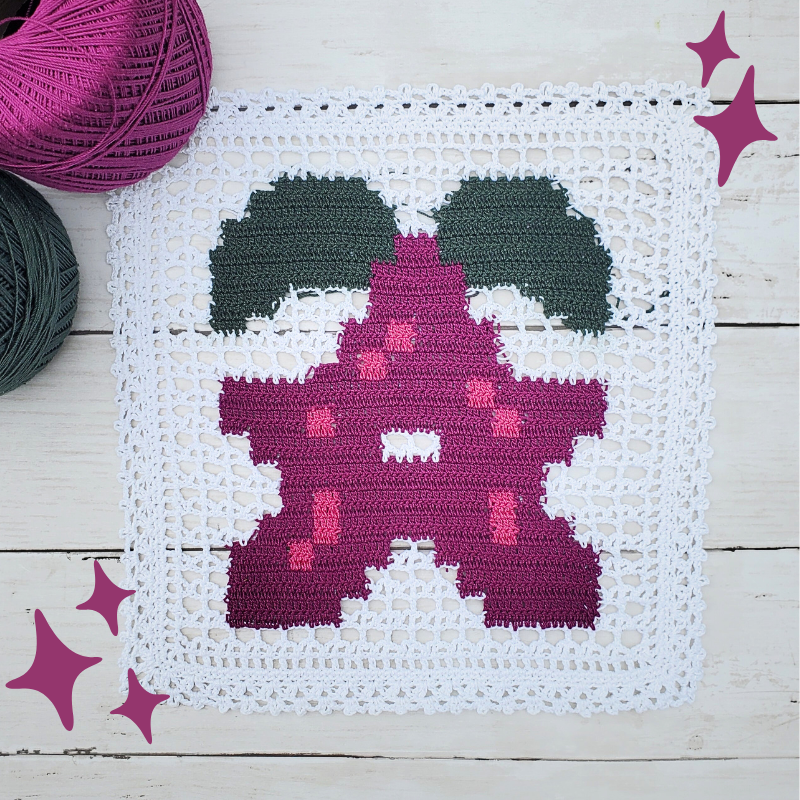
Other Posts You May Like:


Simple Crochet Mittens for Toddlers

Hello everyone, today I have a crochet mitten pattern for a toddler! Winter is finally here and my girls have been needing some new mittens this year. 

I ran out to our local Walmart, and seriously, I think everyone has a kid the same size or age as mine because I could not find ANY in the size I needed. It was either 24 months and under or adult mittens. Aghhh! 

So I thought maybe I could crochet my girls a pair of simple mittens with some of Yarn Bee’s Soft Secret yarn. 

I think these turned out pretty great, and they fit perfectly since I was able to size their hands myself!

These simple crochet mittens should fit ages 2-4 years of age. You can easily adjust this pattern if you’d like however. If you need a smaller size, skip round 3 and continue on, keeping in mind your stitch count will be a tad less. If you need a larger size, add another round of increases by continuing to place 2 hdc in one st and 2 in the next 2 stitches after round 3.

You can also make the cuff length as long as you want (and to be honest, it might be better to make it a little bit longer, especially if you’re like me and have kiddos that ask for help putting their mittens back on frequently). 

These mittens fit both of my girls who are 2 and 4 years of age. Their hand width measured 5-5.25 inches and their hand length measured 4-4.25 inches.

Now, these mittens are soft and warm, but they are not made for playing in the snow. I honestly don’t recommend letting your kids wear crochet mittens for snow play, even if it’s really thick, bulky yarn. It just gets wet and soggy and your child will probably not have a very good time. 

Again, I’m using Yarn Bee Soft Secret in Ivory yarn for these mittens. This yarn is technically a 4 – medium weight, but I think it feels a little smaller and lighter than that, which is why I’m using a 4.25 mm crochet hook instead of a 5 mm crochet hook. It’s also 100% acrylic, but it’s incredibly soft, so it’s great for those little toddler hands!

Related Posts:

Please note that some of these links are affiliate links. That means that if you click on these links and make a purchase, I may receive a commission at no extra cost to you. You can find more information about our disclosure policy here. Thank you for your support.

Materials Needed:

Abbreviations Used:

Please note these are in US terms and not UK.

  • Ch – chain
  • Mc – magic circle
  • St(s) – stitch(es)
  • Sl st – slip stitch
  • Hdc – half double crochet
  • Hdc2tog – half double crochet two stitches together

Special Considerations:

  • These simple crochet mittens are crocheted in a continuous round. This is to prevent a visible seam in your mittens. Use stitch markers or a scrap piece of yarn to help you determine the beginning and end of your rounds.
  • To half double crochet two stitches together (hdc2tog):
    • Yarn over, insert your hook into next stitch, pull up a loop (3 loops on your hook)
    • Yarn over, insert your hook into the next stitch, pull up a loop (5 loops on your hook)
    • Yarn over, pull through all 5 loops on your hook. 

Crochet Mittens (Make Two)

  • Round 1: 8 hdc in mc (alternatively, ch 2 and crochet in first ch) (8 sts)
  • Round 2: 2 hdc in each st around (16 sts)
  • Round 3: 2 hdc in next st, 1 hdc in next st around (24 sts)
  • Round 4-11: 1 hdc in each st around (24 sts)
  • Round 12: 1 hdc in first st, ch 4, skip 2 sts, 1 hdc in next st and each st around (22 sts and 1 ch 4)
  • Round 13: 1 hdc in first st, 4 hdc in ch 4 space, 1 hdc in each st around (make sure to hdc in the st right after the ch 4, see pic below) (26 sts)
  • Round 14: 1 hdc in each st around (26 sts)
  • Round 15: hdc2tog, *1 hdc in next 4 sts, hdc2tog, 1 hdc in next 5 sts*, repeat from *to* once more (22 sts)
  • Round 16: hdc in next 9 sts, hdc2tog, hdc in next 9 sts, hdc2tog (20 sts)
  • Round 17-20 (or until desired length): 1 hdc in each st around, sl st to first st (20 sts)

Cut yarn with scissors, pull yarn through and weave in end with tapestry needle.

Crochet Mittens for Toddlers Round 1
Round 1
Crochet Mitten Pattern Round 2
Round 2
Crochet Mittens for Toddler Free Pattern Round 3
Round 3
Crochet Toddler Mittens for Beginners
Round 4-11
Crochet Mittens
Round 12
HDC in this stitch
Round 13
Crochet Mittens with Thumb
Round 20

Thumb:

  • Round 1: holding your mitten downwards, join in the ch 4 space with a slip st in any st. Ch 1, hdc in same st, hdc in each st around, there will be a part in the thumb space where you will have to hdc in sts that are upside from round 12 of the mitten. Make 14 hdc around total (14 sts)
  • Round 2-3: 1 hdc in each st around (14 sts)
  • Round 4: hdc2tog, 1 hdc in next 5 sts, hdc2tog, 1 hdc in next 5 sts (12 sts)
  • Round 5: *hdc2tog, 1 hdc in next st,* repeat from *to* around (8 sts)

Leave enough yarn for sewing, cut with scissors, weave the top of the thumb shut with tapestry needle.

Crochet Mittens Pattern Free
Round 1 of Thumb

Viola! These simple crochet mittens are so soft and cute, I hope your little ones enjoy them too!

Thank you for checking out this pattern, until next time!
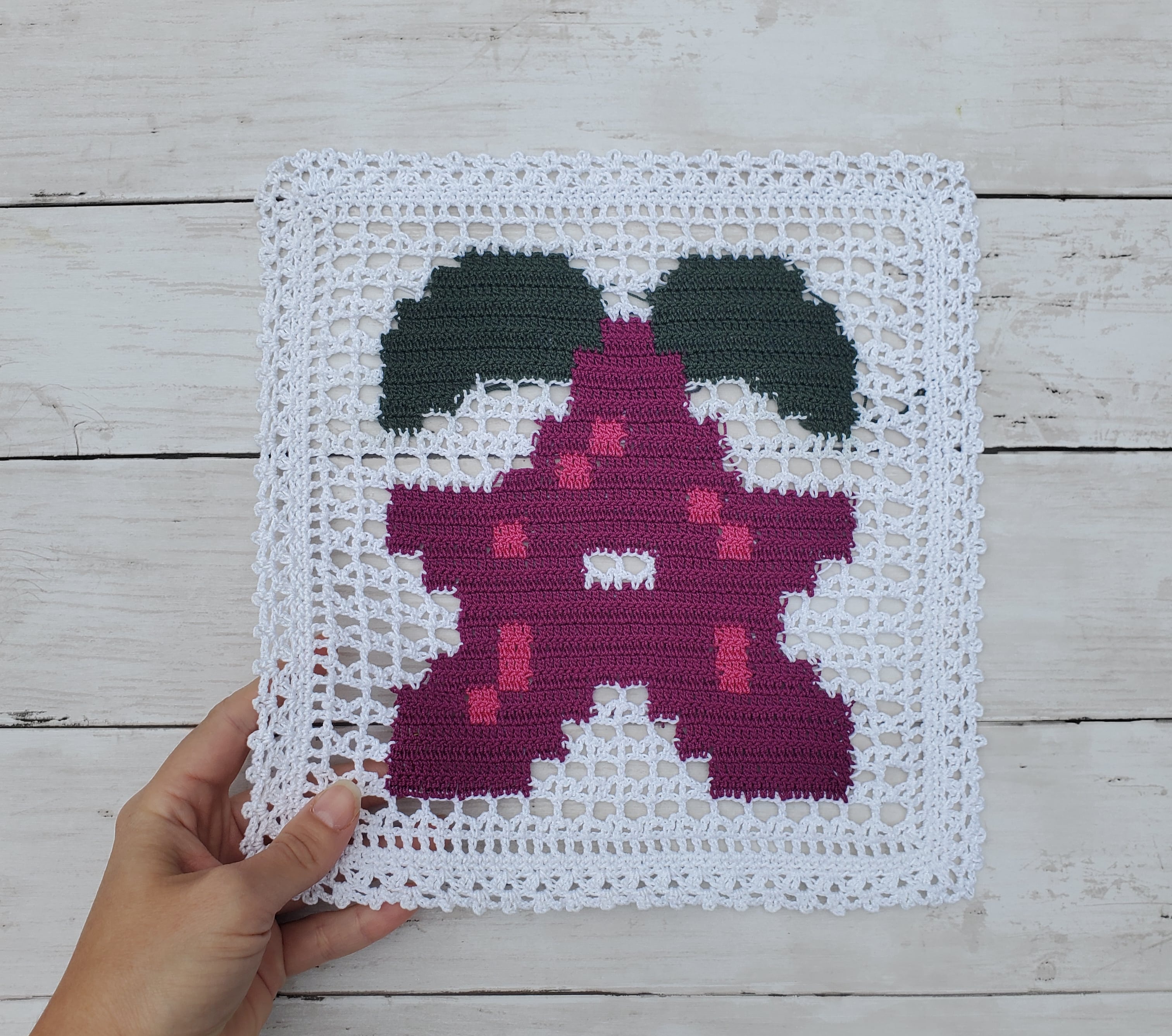
Other Posts You May Like: