Incredibly Gorgeous Crochet Animal Crossing Doily

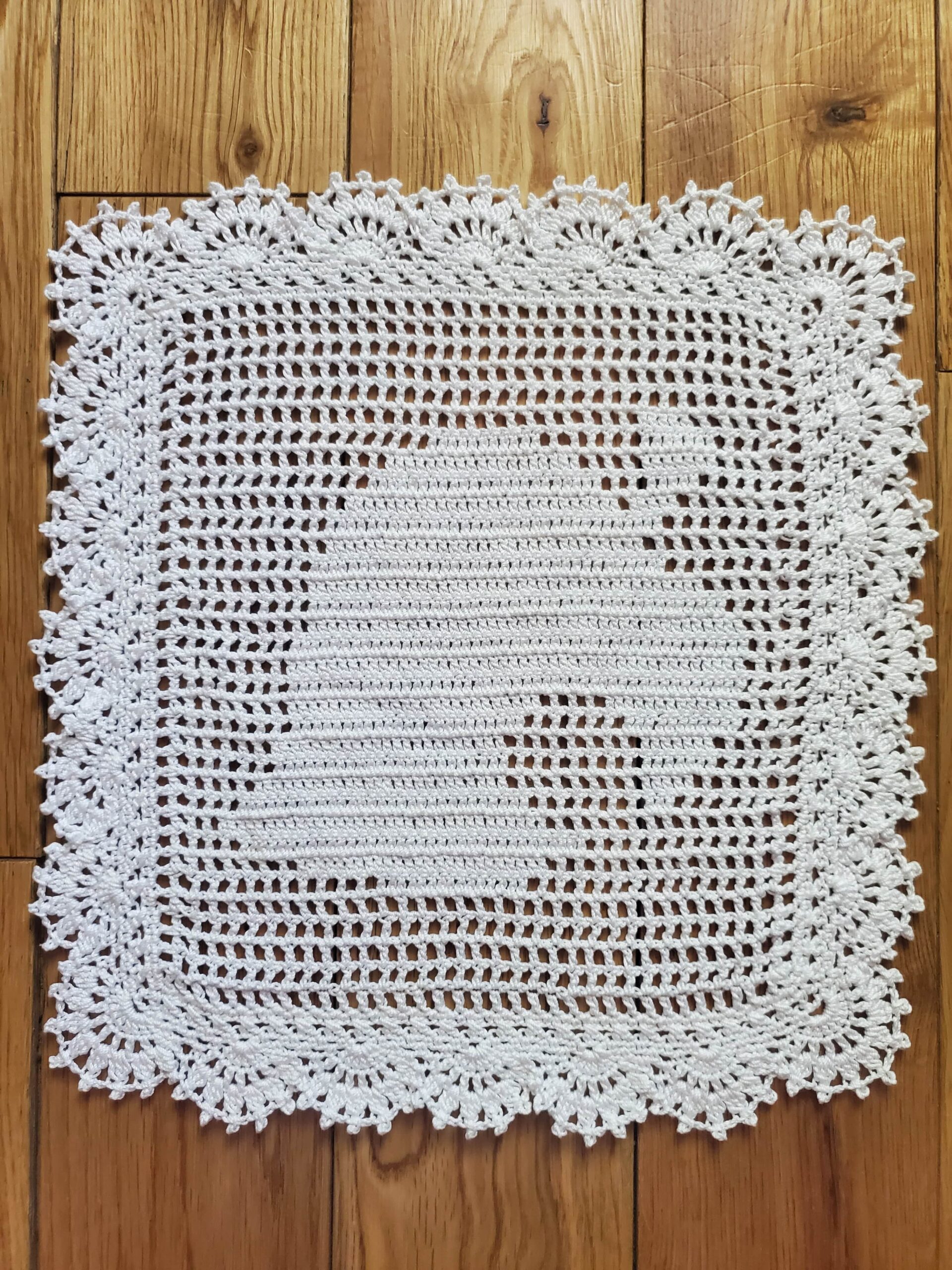
Hi everyone, today we will be learning how to crochet this beautiful Crochet Animal Crossing Doily!

Who can forget the iconic leaf logo from Animal Crossing? Not me! 

I have loved Animal Crossing for a long time. My first game was actually Animal Crossing Wild World on the DS back in the day, but I quickly fell in love and grabbed the original game on the GameCube too.

Since I’ve enjoyed Animal Crossing so much, I thought I’d give it a fun little tribute and make a doily from the leaf that appears when you grab items.

I’m making this doily in a very similar way as my Crochet Legend of Zelda Doily as well, so you should totally check it out!

The center piece of the doily is actually just filet crochet, and then I’ve added a cute little border around it.

If you don’t know what filet crochet is, boy you are missing out! You can make almost any image you want doing this technique, it just takes a little time to get the dimensions right.

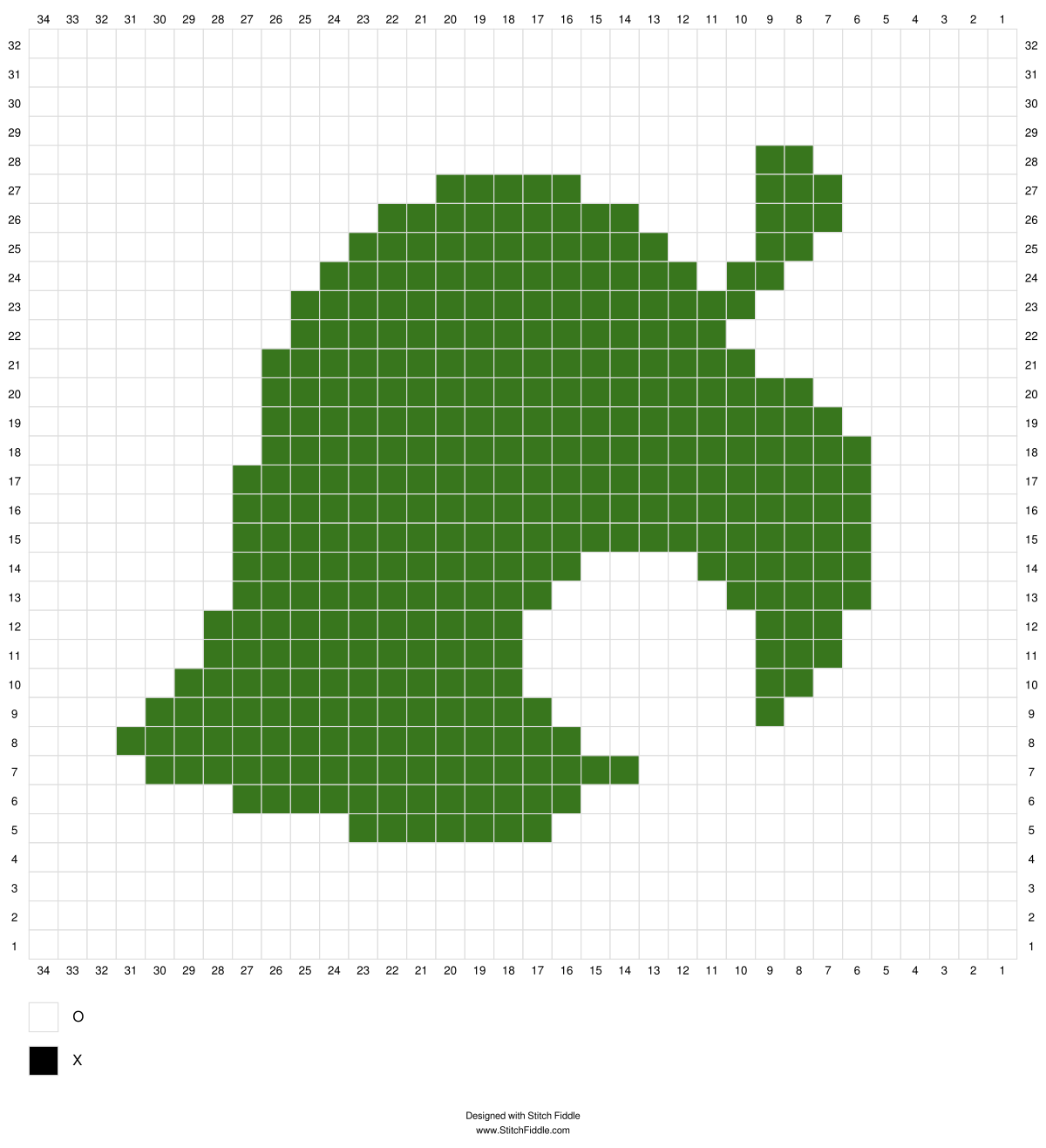
If you know how to read a crochet chart, I have one provided below.

It’s honestly super tedious to write out patterns for filet crochet and it’s a lot easier just to look at a chart. However, I am writing how to get you started on the doily and how to do the border.

I have also learned that making crochet charts/diagrams is still super hard, this time I tried my best to free hand the pattern in Procreate, but sheesh it was still hard! So I apologize in advance, my double crochets sort of run together, but I think you can get the gist of it!

Please note that some of these links in this post may be affiliate links. That means that if you click on these links and make a purchase, I may receive a commission at no extra cost to you. You can find more information about our disclosure policy here. Thank you for your support.

Blocking 

I definitely recommend blocking this doily and literally all doilies you ever crochet. They tend to look scrunched up and don’t sit very flat after you’re done making them.

If you’re going to make these beauties, I strongly suggest soaking them in water, patting them gently with a towel, stretching it on a blocking board and anchoring it down with pins.

Okay let’s go ahead and get started! 👇

Related Posts:

Materials Needed:

Abbreviations Used:

  • Ch – chain
  • Sl st – slip stitch 
  • Sc – single crochet
  • Dc – double crochet

Special Stitches:

  • 3dc Cluster – (YO (yarn over), insert hook into st, pull up a loop, YO, pull through 2 loops x3 times), should have 4 loops left on hook, YO, pull through all 4 loops.
  • X Stitch – skip 2 sts, dc into next st, going behind the st just made, skip a st, dc into the next
  • Ch 3 Picot – ch 3, sl st into the top of last st made

Special Instructions:

  • The starting ch 4s all count as a dc and ch 1 for the leaf pattern in the center.
  • I will be referring to open squares and closed squares throughout this pattern. An open square consists of a block of: (dc, ch 1, dc) and a closed squares consists of a block of (3dc). These are filet crochet terms that make it easier to count rather than counting each individual stitch.

Crochet Animal Crossing Doily Pattern
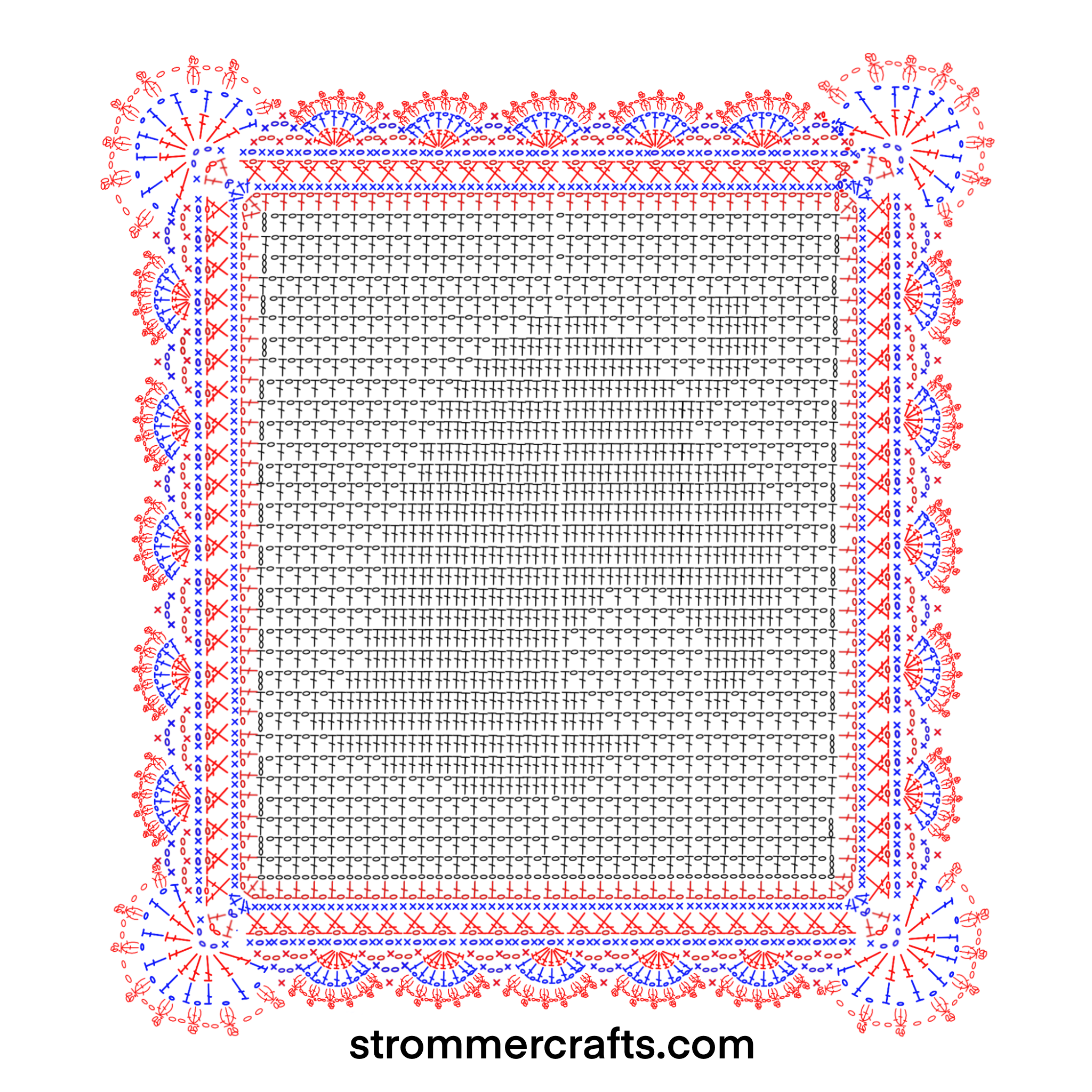
I have two charts to look at as a reference. The first one has the border included and the second one is just the leaf in a simple grid chart.

I thought maybe the top chart with the border might be hard to read in the middle, so I wanted to provided a second option. 

For the green leaf chart, each white square is an open square and each green square is a closed square.

Row 1: Start by making 69 chains.

Dc into 7th ch from hook, *ch 1, skip a ch, dc into next ch.* Repeat from *to* until end. You should have 32 “open” squares in this row.

Row 2-4: Ch 4, dc into next dc, ch 1, skip a ch and dc into next dc all the way across. 32 open squares.

Row 5: We will start to make the bottom of the leaf in this row. I am starting by reading the chart from the right side to the left, you can do either way, but make sure the leaf is facing the correct way when you get to the border.

Ch 4, dc into next dc, ch 1, skip a ch, dc into next dc…do this for a total of 14 squares. Dc into next ch 1 space, dc into next dc (this is one closed square made) make 6 more closed squares for a total of 7 closed squares in this row. Make 11 more open squares for the remainder of row. 

Row 6-32: Follow the chart(s) until you reach the border.

Border:

Round 1: Ch 4, make open squares until first corner (you should have a dc in the top of the 3rd ch from previous row here). (Ch 1, dc, ch 1, dc) in the same ch. This makes a corner of 3 dc separated by ch 1s. Turn down the side of the doily, ch 1, skip length of ch 3, dc in dc from row 31, ch 1, skip length of dc, dc into top of ch 3. Continue making open squares down the side. The second corner should be in the last ch of row 1. (Dc, ch 1, dc, ch 1, dc) in this ch. Refer to chart for details. Sl st to top of starting ch 1. (34 open squares on each side)

Round 2: Ch 1, sc in same ch, sc into each dc and ch 1 space across. When you get to the center dc of the first corner (2 sc, ch 2, 2 sc) in center dc. Continue this way around. Sl st to starting sc. (71 sc on each side with ch 2 space in corners)

Round 3: Ch 4 (counts as dc and ch 1), instead of going forward, go behind and dc into the sc st away from starting ch. Going forward, skip 2 sts, dc into next st, ch 1, turn behind, skip a st, dc into next st. This is an X stitch. Continue X stitches across, (dc, ch 2, dc) into ch 2 corner space. Sl st into 3rd ch of starting ch 4. (23 X stitches on each side with (dc, ch 2, dc) corners)

Round 4: Ch 1, sc into same ch. Ch 1, *skip ch 1 space, sc into next 2 dc.* Repeat from *to.* in corners make ch 3 over ch 2 space. Sl st into first sc.

Round 5: Sl st again into ch 1 space. Ch 1, sc into ch 1 space. *(Ch 2, skip 2 sc, sc into next ch 1 space x2 times). Skip 2 sc, in next ch 1 space make 7 dc (first shell made). Skip 2 sc, sc in next ch 1 space.* Repeat from *to* until corner. Make 9 dc in ch 3 corner space. Skip 2 sc, sc into next ch 1 space. Continue this way around. Sl st into starting sc. (5 7dc shells on each side with 9dc shells in corner).

Round 6: Sl st again into ch 2 space. Ch 2, sc into next ch 2 space. *In shell from previous row, make dc in first dc, ch 1, dc into next dc (make total of 7dc and 6 ch 1s). Sc into next ch 2 space, ch 2, sc into next ch 2 space.* Repeat from *to.* until corner. Make corner in similar fashion to other shells (8 dc and 8 ch 1s). Continue around. Sl st into starting sc.

Round 7: Ch 1, sl st again into ch 2 space. In first ch 1 space of next shell make 3 dc cluster. Ch 3, sl st into top of 3 dc cluster (ch 3 picot made). (Ch 2, 3dc cluster, ch 3 picot in top of cluster in each ch 1 space of shell, should have 6 3dc clusters with 6 ch 3 picots separated by ch 2s). Sc into next ch 2 space. Continue across make corners in similar fashion to previous shells. Sl st to starting sc.

Cut thread with scissors, pull through. Weave in any ends with tapestry needle.

Blocking, Optional But Recommended:

I suggest blocking your Crochet Animal Crossing Doily. I used just water, but if you want it stiff, use a starch solution.

You will need a bowl of water, a towel, pins, and something to block it on. I use this blocking board, but you can use a pizza box or a cardboard box that is large enough.

Soak the doily in the bowl of water for a minute. Gently press it down to get all the air out of the thread. 

Pick the doily up out of the water and pat it gently with the towel. Do not wring the water out. 

Place the doily on your blocking board or Cardboard box and pin as evenly as possible. Allow to dry for 1-2 days.
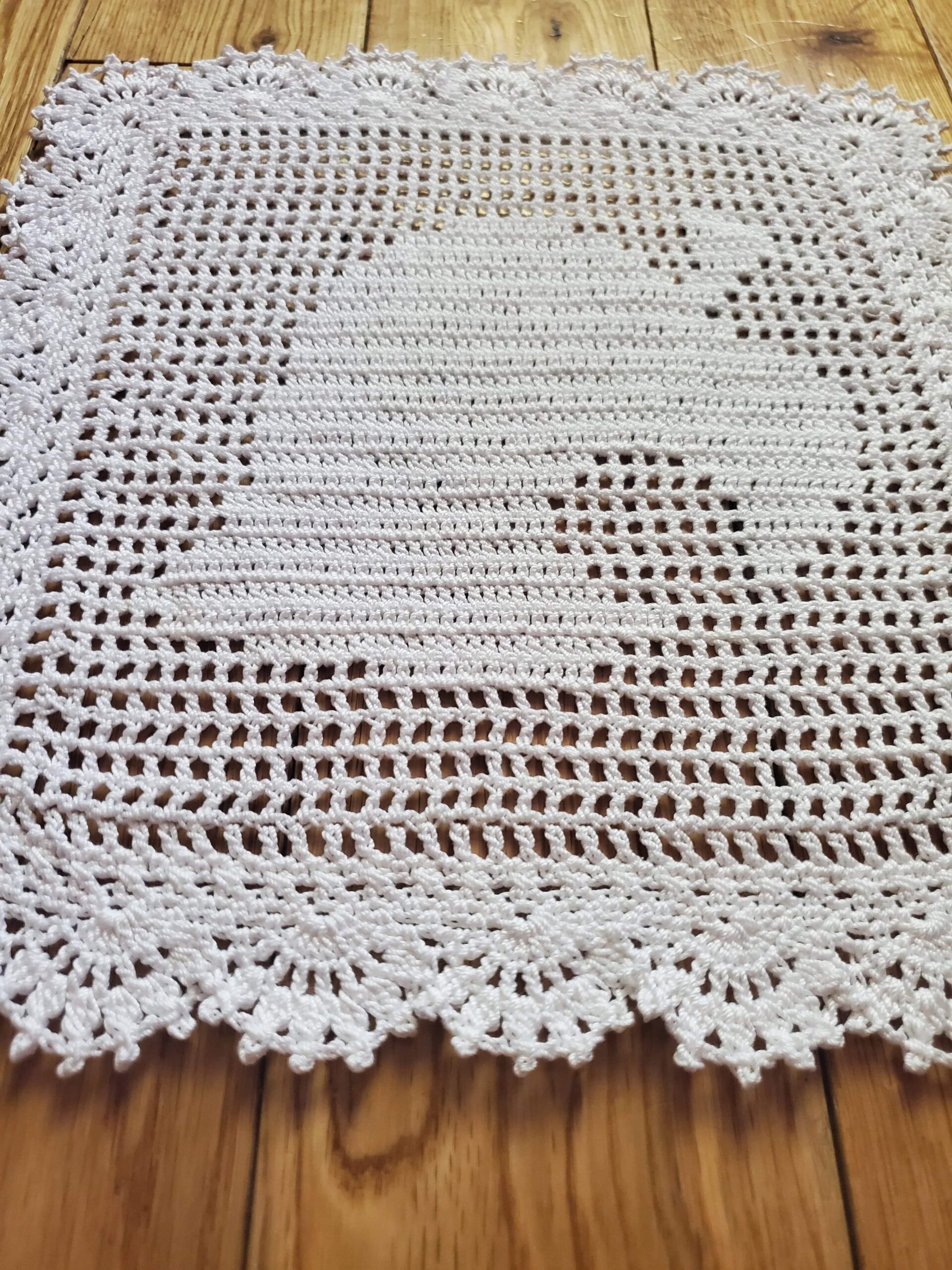
That’s it for the Crochet Animal Crossing Doily! I hope that you enjoyed this pattern and that the chars were helpful.

Until next time.
Other Posts You May Like:

Animal Crossing Crochet Tabletop Pattern – Free Pattern

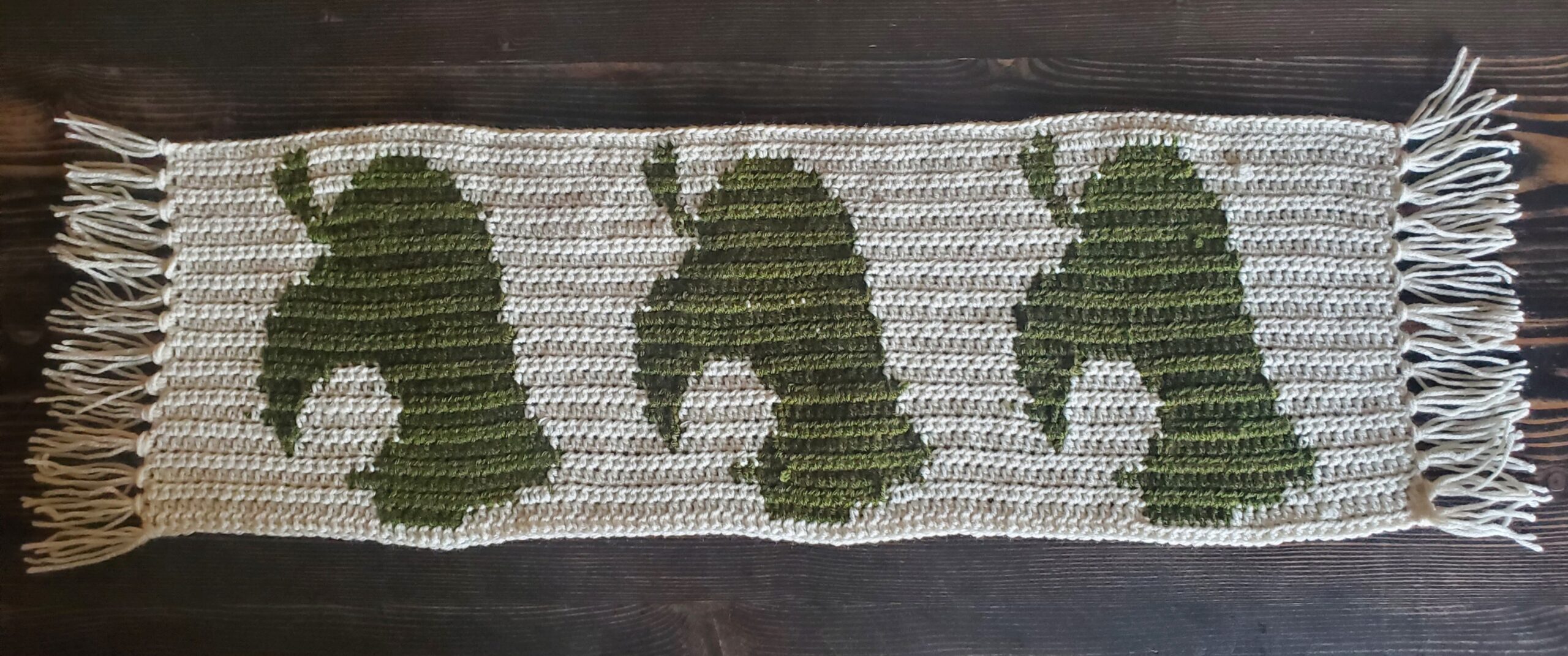
Hello and welcome back to another free crochet pattern, created by yours truly! Today I have for you an Animal Crossing Crochet Tabletop Pattern! Now that summer is here, I always tend to crochet more decorative items, because let’s be real…wearing acrylic crochet is not much fun in the heat.

Animal Crossing is another video game that is near and dear to my heart. I’ve been feeling a little nostalgic recently and I have fond memories of playing Animal Crossing during my childhood. It’s such a relaxing game with lots of open ended play. 

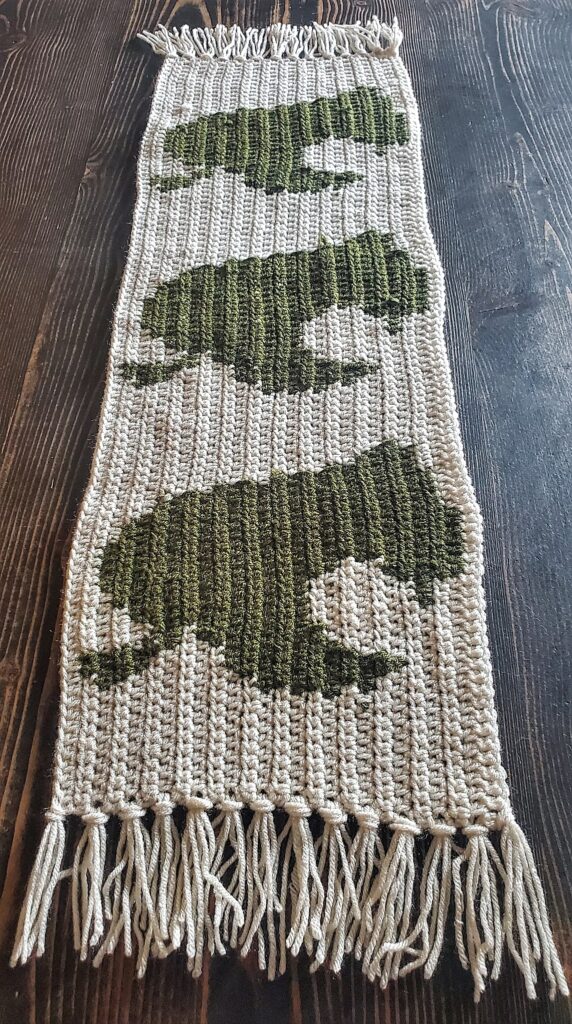
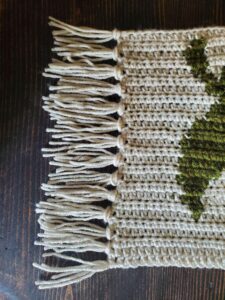
I would use this as a centerpiece for your table or coffee table. It’s a little too tall (thick? lol!) to be a runner for an end table in my opinion. When completed (and prior to blocking), my piece measured roughly 31″ x 9.5″ before adding fringe.

The Animal Crossing Crochet Tabletop Pattern has the iconic leaf logo from the game in a repeat of three. 

You’ll have to change between two colors throughout the pattern. I will explain my process below, however, feel free to use whatever method of color changing you prefer. If you need more help, you can check out my previous post on How to Color Change in Crochet the Right Way.

Tag me on Instagram with your finished projects @strommercrafts!

Thank you and I hope you enjoy this pattern! 🙂

Check out these other FREE Crochet Patterns!
Animal Crossing Crochet Tabletop Decor Runner

Materials Needed:

  • 5 mm crochet hook
  • 1 skein of Red Heart Super Saver Worsted Weight Size 4 in Aran color
  • 1 skein of Red Heart Super Saver Worsted Weight Size 4 in Thyme color
  • Tapestry Needle
  • Scissors
  • Stitch marker (optional)

Abbreviations Used:

  • ch – chain
  • st(s) – stitch(es)
  • hdc – half double crochet
  • CTA – change to aran
  • CTT – change to thyme

Useful Tips:

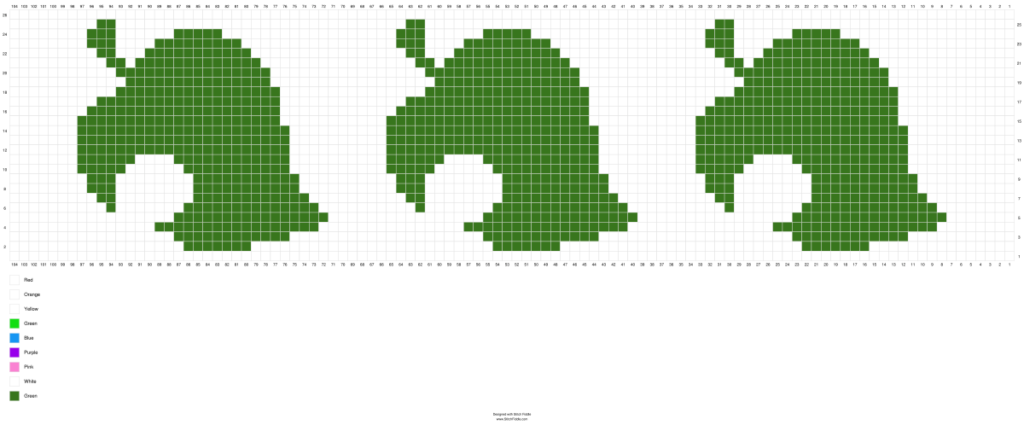
  • I have written out all the color changes below, but I have a picture and PDF of the chart if you’re more of a visual person. If using the chart, each square = 1 hdc.
  • Read the chart left to right for row 1, right to left for row 2 and so on. 
  • Use the stitch marker on one side to help you determine left from right.
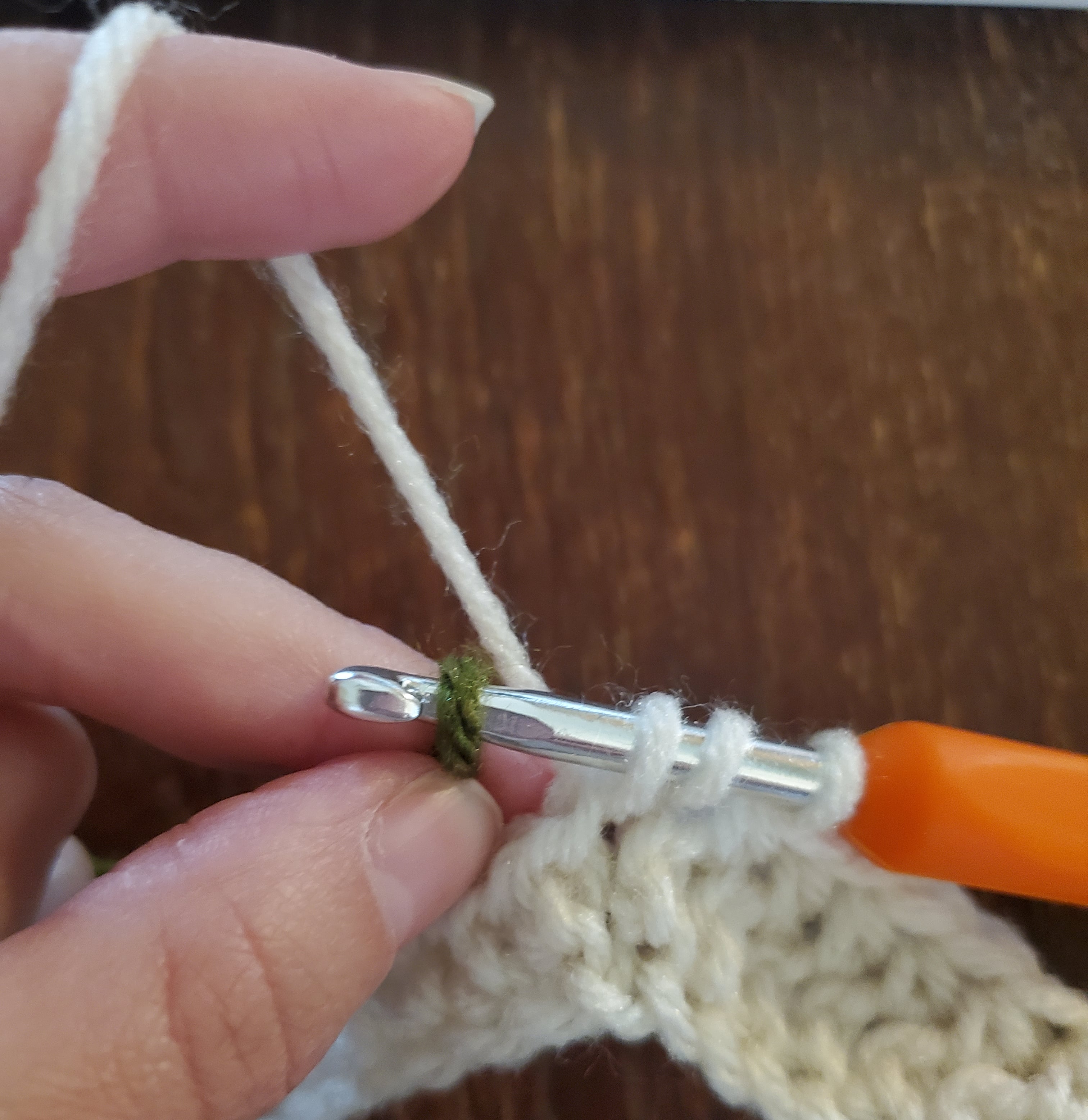
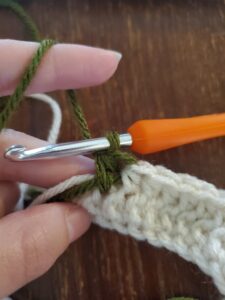
  • When changing colors, you’ll always stop 1 st before the needed color change. Do not finish your hdc all the way (you’ll have 3 strands of yarn on your hook), put your new color on the hook and pull through.
    • For example: I have aran on my hook and need to switch to thyme on the 10th st (or square if using the chart). On the 9th stitch I will color change as described above.
  • I tend to crochet the ends of my yarn along the way when I can. You can weave the ends in if you’d rather. If you weave in too many ends, you tend to get a little wave/bulge going in your work.
  • I chose to carry the aran color throughout the pattern, even when working on the leaves, but I dropped the thyme color only in the spaces between the leaves. (Due to the light aran color, you can really see the thyme color between stitches, which is fine, it’s just not my preference).
Animal Crossing Crochet Tabletop Graph

Animal Crossing Crochet Tabletop Pattern:

  • Row 1 – With Aran color, Ch 105, hdc in second chain from hook, 1 hdc in each ch until end of row. (104 sts) 
  • Row 2 – Turn, ch 1, 1 hdc in next 15 sts (don’t finish the 15th stitch all the way, with 3 strands of yarn on your hook, switch to green yarn and pull through. Do this for switching between colors throughout the pattern), *with green yarn, 1 hdc in next 7 sts, CTA, 1 hdc in next 25 sts*. Repeat from *to* once more. CTT, 1 hdc in next 7 sts, CTA, 1 hdc in next 18 sts (104 sts) 
Color Changing in Crochet Step 1
Hdc, don't finish all the way, place thyme on hook
Color Change in Crochet Step 2
Pull through with thyme (you might have to pull on/keep taut both yarns to keep a tight stitch)
  • Row 3 – Turn, ch 1, 1 hdc in next 17 sts, *CTT, 1 hdc in next 12 sts, CTA, 1 hdc in next 20 sts*. Repeat from *to* once more. CTT, 1 hdc in next 12 sts, CTA, 1 hdc in next 11 sts (104 sts)
  • Row 4 – Turn, ch 1, 1 hdc in next 8 sts, *CTT, 1 hdc in next 17 sts, CTA, 1 hdc in next 15 sts*. Repeat from *to* two more times. (104 sts)
  • Row 5 – Turn, ch 1, 1 hdc in next 17 sts, *CTT, 1 hdc in next 16 sts, CTA, 1 hdc in next 16 sts*. Repeat from *to* once more. CTT, 1 hdc in next 16 sts, CTA, 1 hdc in next 7 sts (104 sts)
  • Row 6 – Turn, ch1, 1 hdc in next 8 sts, *CTT, 1 hdc in next 14 sts, CTA, 1 hdc in next 7 sts, CTT, 1 hdc in next st, CTA, 1 hdc in next 10 sts*. Repeat from *to* two more times. (104 sts)
  • Row 7 – Turn, ch 1, 1 hdc in next 9 sts, *CTT, 1 hdc in next 2 sts, CTA, 1 hdc in next 8 sts, CTT, 1 hdc in next 12 sts, CTA, 1 hdc in next 10 sts*. Repeat from *to* once more. CTT, 1 hdc in next 2 sts, CTA, 1 hdc in next 8 sts, CTT, 1 hdc in next 12 sts, CTA, 1 hdc in next 9 sts. (104 sts)
  • Row 8 – Turn, ch 1, 1 hdc in next 10 sts, *CTT, 1 hdc in next 11 sts, CTA, 1 hdc in next 8 sts, CTT, 1 hdc in next 3 sts, CTA, 1 hdc in next 10 sts*. Repeat from *to* once more. CTT, 1 hdc in next 11 sts, CTA, 1 hdc in next 8 sts, CTT, 1 hdc in next 3 sts, CTA, 1 hdc in next 8 sts. (104 sts)
  • Row 9 – Turn, ch 1, 1 hdc in next 8 sts, *CTT, 1 hdc in next 3 sts, CTA, 1 hdc in next 8 sts, CTT, 1 hdc in next 11 sts, CTA, 1 hdc in next 10 sts*. Repeat from *to* once more. CTT, 1 hdc in next 3 sts, CTA, 1 hdc in next 8 sts, CTT, 1 hdc in next 11 sts, CTA, 1 hdc in next 10 sts. (104 sts)
  • Row 10 – Turn, ch 1, 1 hdc in next 11 sts, *CTT, 1 hdc in next 11 sts, CTA, 1 hdc in next 6 sts, CTT, 1 hdc in next 5 sts, CTA, 1 hdc in next 10 sts*. Repeat from *to* once more. CTT, 1 hdc in next 11 sts, CTA, 1 hdc in next 6 sts, CTT, 1 hdc in next 5 sts, CTA, 1 hdc in next 7 sts. (104 sts)
  • Row 11 – Turn, ch 1, 1 hdc in next 7 sts, *CTT, 1 hdc in next 6 sts, CTA, 1 hdc in next 4 sts, CTT, 1 hdc in next 12 sts, CTA in next 10 sts*. Repeat from *to* once more. CTT, 1 hdc in next 6 sts, CTA, 1 hdc in next 4 sts, CTT, 1 hdc in next 12 sts, CTA in next 11 sts. (104 sts)
  • Row 12 – Turn, ch 1, 1 hdc in next 11 sts, *CTT, 1 hdc in next 22 sts, CTA, 1 hdc in next 10 sts*. Repeat from *to* once more. CTT, 1 hdc in next 22 sts, CTA, 1 hdc in next 7 sts. (104 sts).
  • Row 13 – Turn, ch 1, 1 hdc in next 7 sts, *CTT, 1 hdc in next 22 sts, CTA, 1 hdc in next 10 sts*. Repeat from *to* once more. CTT, 1 hdc in next 22 sts, CTA, 1 hdc in next 11 sts. (104 sts)
  • Row 14 – Turn, ch 1, 1 hdc in next 11 sts, * CTT, 1 hdc in next 22 sts, CTA, 1 hdc in next 10 sts*. Repeat from *to* once more. CTT, 1 hdc in next 22 sts, CTA, 1 hdc in next 7 sts. (104 sts)
  • Row 15 – Turn, ch 1, 1 hdc in next 7 sts, *CTT, 1 hdc in next 21 sts, CTA, 1 hdc in next 11 sts*. Repeat from *to* once more. CTT, 1 hdc in next 21 sts, CTA, 1 hdc in next 12 sts. (104 sts)
  • Row 16 – Turn, ch 1, 1 hdc in next 12 sts, *CTT, 1 hdc in next 20 sts, CTA, 1 hdc in next 12 sts*. Repeat from *to* once more. CTT, 1 hdc in next 20 sts, CTA, 1 hdc in next 8 sts. (104 sts)
  • Row 17 – Turn, ch 1, 1 hdc in next 9 sts, *CTT, 1 hdc in next 19 sts, CTA, 1 hdc in next 13 sts*. Repeat from *to* once more. CTT, 1 hdc in next 19 sts, CTA, 1 hdc in next 12 sts. (104 sts)
  • Row 18 – Turn, ch 1, 1 hdc in next 12 sts, *CTT, 1 hdc in next 17 sts, CTA, 1 hdc in next 15 sts*. Repeat from *to* once more. CTT, 1 hdc in next 17 sts, CTA, 1 hdc in next 11 sts. (104 sts)
  • Row 19 – Turn, ch 1, 1 hdc in next 12 sts, *CTT, 1 hdc in next 15 sts, CTA, 1 hdc in next 17 sts*. Repeat from *to* once more. CTT, 1 hdc in next 15 sts, CTA, 1 hdc in next 13 sts. (104 sts)
  • Row 20 – Turn, ch 1, 1 hdc in next 13 sts, *CTT, 1 hdc in next 16 sts, CTA, 1 hdc in next 16 sts*. Repeat from *to* once more. CTT, 1 hdc in next 16 sts, CTA, 1 hdc in next 11 sts. (104 sts)
  • Row 21 – Turn, ch 1, 1 hdc in next 10 sts, *CTT, 1 hdc in next 2 sts, CTA, 1 hdc in next st, CTT, 1 hdc in next 13 sts, CTA, 1 hdc in next 16 sts*. Repeat from *to* once more. CTT, 1 hdc in next 2 sts, CTA, 1 hdc in next st, CTT, 1 hdc in next 13 sts, CTA, 1 hdc in next 14 sts (104 sts)
  • Row 22 – Turn, ch 1, 1 hdc in next 15 sts, *CTT, 1 hdc in next 11 sts, CTA, 1 hdc in next 3 sts, CTT, 1 hdc in next 2 sts, CTA, 1 hdc in next 16 sts*. Repeat from *to* once more. CTT, 1 hdc in next 11 sts, CTA, 1 hdc in next 3 sts, CTT, 1 hdc in next 2 sts, CTA, 1 hdc in next 9 sts (104 sts)
  • Row 23 – Turn, ch 1, 1 hdc in next 8 sts, *CTT, 1 hdc in next 3 sts, CTA, 1 hdc in next 4 sts, CTT, 1 hdc in next 9 sts, CTA, 1 hdc in next 16 sts*. Repeat from *to* two more times. (104 sts)
  • Row 24 – Turn, ch 1, 1 hdc in next 18 sts, *CTT, 1 hdc in next 5 sts, CTA, 1 hdc in next 6 sts, CTT, 1 hdc in next 3 sts, CTA, 1 hdc in next 18 sts*. Repeat from *to* once more. CTT, 1 hdc in next 5 sts, CTA, 1 hdc in next 6 sts, CTT, 1 hdc in next 3 sts, CTA, 1 hdc in next 8 sts. (104 sts)
  • Row 25 – Turn, ch 1, 1 hdc in next 9 sts, *CTT, 1 hdc in next 2 sts, CTA, 1 hdc in next 30 sts*. Repeat from *to* once more. CTT, 1 hdc in next 2 sts, CTA, 1 hdc in next 29 sts. (104 sts)
  • Row 26 – Turn, ch 1, 1 hdc in each st across (104 sts). Cut yarn and pull through. Weave in ned with tapestry needle.

Fringe:

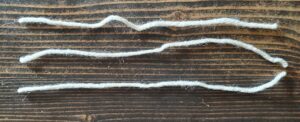
  • Cut 3 strands of aran yarn about 8″ long
3, 8 inch strands of aran yarn for fringe
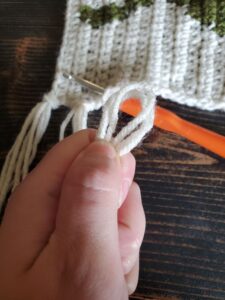
  • Line up strands and make a loop. Make sure the ends are lined up evenly.
  • Insert 5 mm hook from bottom to top in end of row 26.
Loop strands for fringe
Insert hook bottom to top
  • Put your looped strands on the hook and pull through, but not all the way!
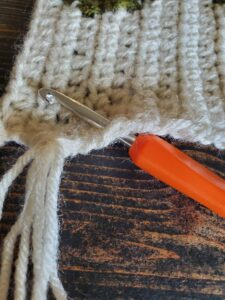
  • Pull the end of the strands through the loop, either with your hands or your hook.
  • Pull the strands snug.
  • Repeat steps in every other row all the way down both edges. 
  • You’ll have to put the last two fringes next to each other.
  • Trim up any long strands with scissors.
Completed Fringe

And that is it! I hope this pattern was easy enough to follow! I would love to see your finished projects below…tag me on IG @strommercrafts!

Until next time! 🙂